@frontoffice.co
TikTok · Talking Head Edit

@frontoffice.co Knickerbockers, Nikkapokka and Japanese construction pants. #fashiondesigner #workwear

@frontoffice.co
TikTok · Talking Head Edit
@frontoffice.co Knickerbockers, Nikkapokka and Japanese construction pants. #fashiondesigner #workwear
Performance
Video #6714 · Talking Head Edit
[01]
The speaker explains the surprising history of Japanese Tobi construction pants. He traces their lineage from the 'Knickerbockers' worn by Dutch settlers in New York, through their adoption as sportswear and military uniforms, to their eventual evolution into a quintessential piece of Japanese workwear with unique functional purposes.
[02]
[03]
 339.3KDeconstructing samurai pants design philosophy@frontoffice.co · Case Study Breakdown
 565.7K1.7×Explaining Japanese denim's origin story@sakata.ken · Origin Story
 412KExplaining why military pants are stronger@theironsnail · Breakdown
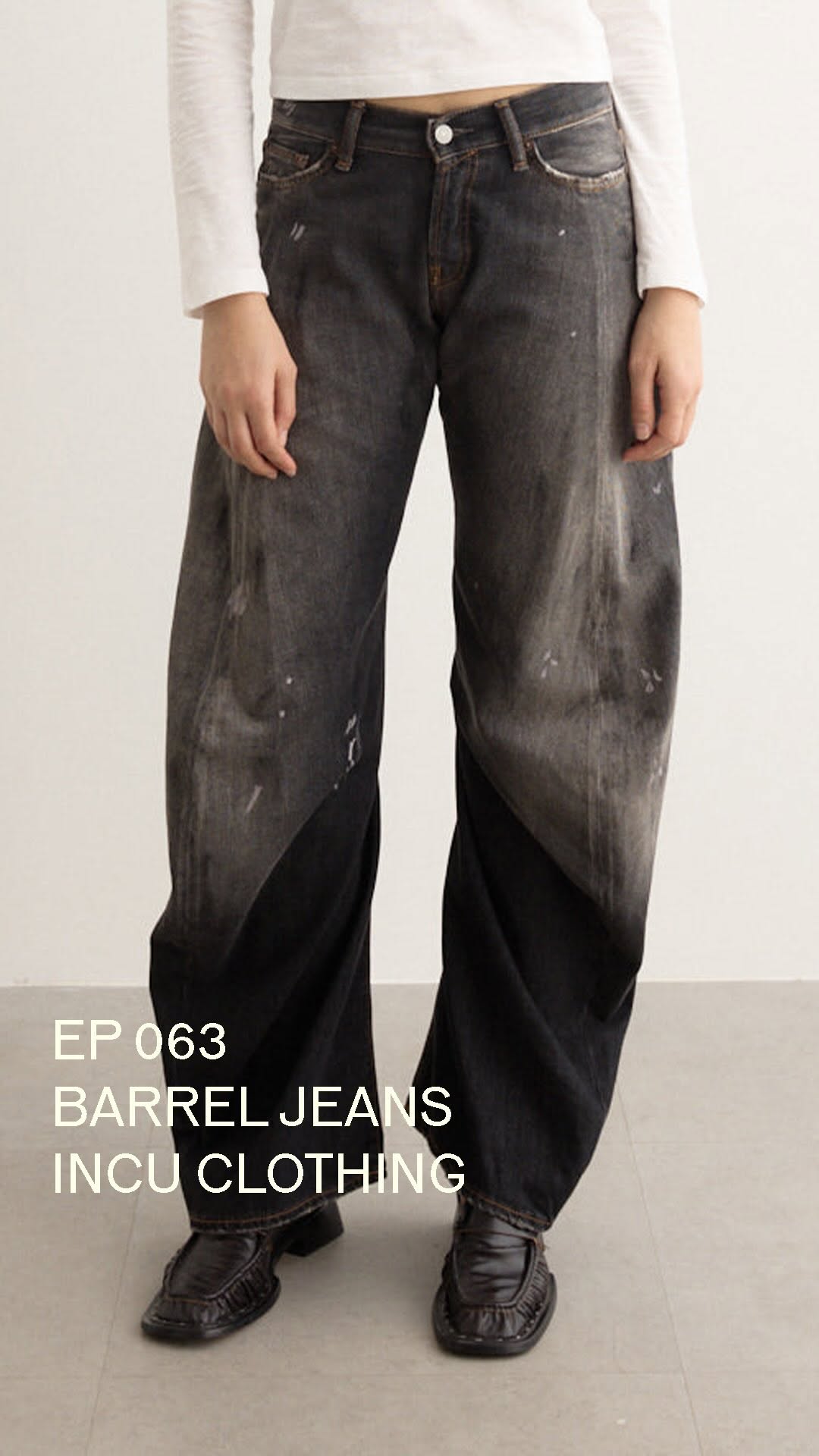 858.5K2.8×Expert explains barrel jeans history@sakata.ken · Breakdown
 2.5MExplaining a niche fashion term@stylebidder · Breakdown
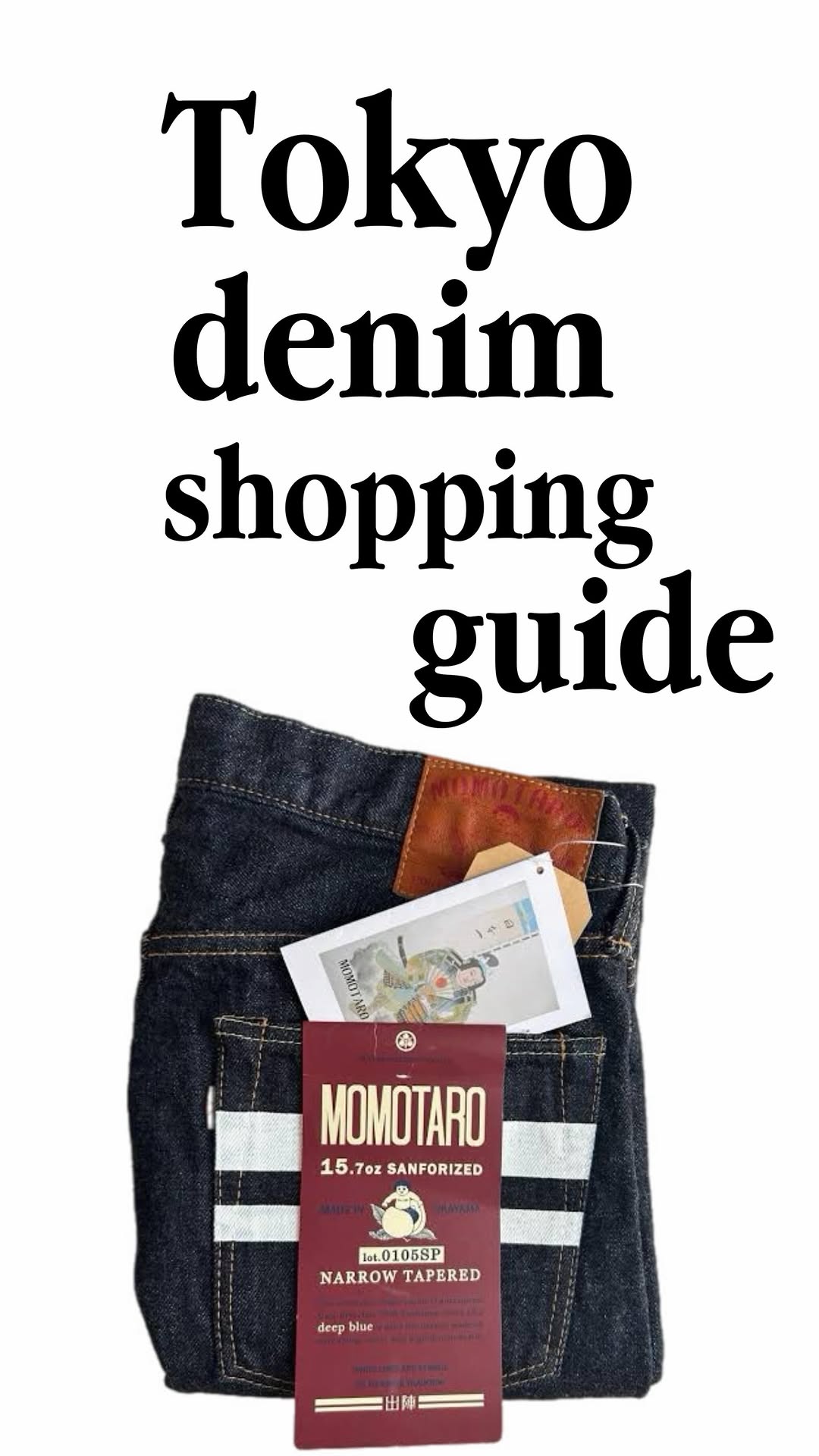 1.6M20.6×Japan clothing shopping guide list@ceezee999 · Buying List
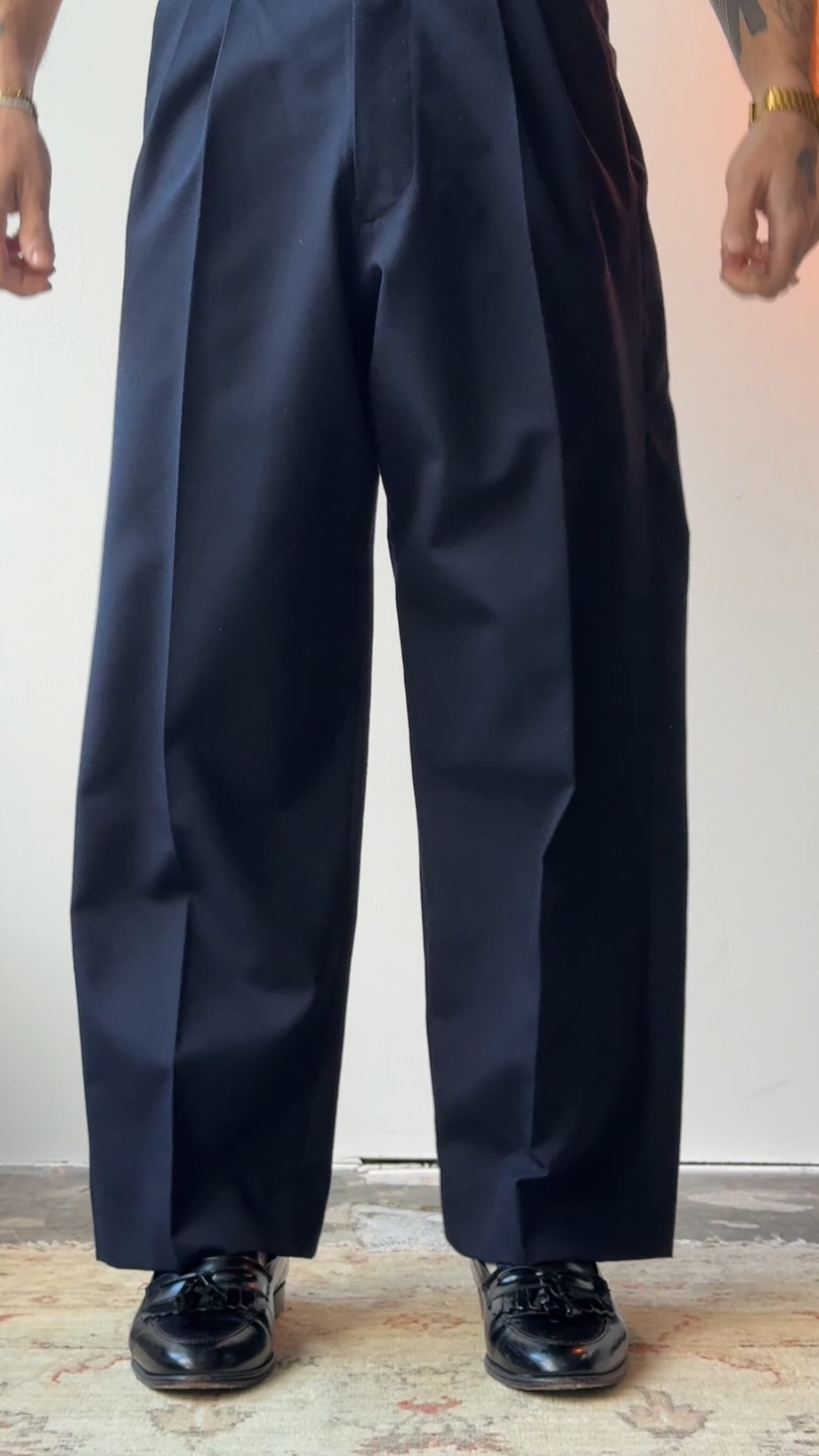 101.3K24.5×Creator showcases new vintage-style trousers@dirosa.bts · Product Showcase
 2.4MQuick list of essential pants@emmanuel.uddenberg · Buying List
 642.7K5.1×Demonstrating a pant cuff hack@aelfaco · Tutorial / How To
 901.6K19.9×Customer feedback inspires new product@popflex_active · Origin Story
 480.1K1.1×Comparing three brands' design philosophies@frontoffice.co · Case Study Breakdown
 118.9K1.1×Explaining why a jacket was poorly made@crust_young · Breakdown
[04]
[05]
What stops the scroll in the first 3 seconds
Title hook · 35%
Japanese construction pants
Verbal hook · 25%
These are Japanese construction pants, tobi pants.
Visual hook · 40%
A quick cut from the speaker to a full-body shot of a man wearing distinctive, wide-legged blue pinstripe pants against a black background.
[07]
The promise the opener makes, and how the video pays it back
Hook
An object with a distinct and unusual appearance is presented, followed by a direct question about its defining feature, creating an immediate mystery for the viewer.
Payoff
The narrative concludes by synthesizing the entire historical journey into a grand, unifying theme. It posits that simple design objects are not just functional but are artifacts carrying complex historical, political, and social narratives, providing a profound intellectual takeaway.
[08]
The structural pattern this video runs on
Framework
The Unexpected Lineage
To deconstruct a culturally specific object by revealing its surprising, multi-layered, and cross-cultural history, culminating in a broader thematic statement about design and culture.
The Curious Artifact
Introduce a visually distinct and culturally identifiable object, highlighting its 'funky' or unusual characteristics to establish it as the subject of inquiry.
The Common Assumption
State the viewer's likely preconceived notion or stereotype about the object's origin and meaning, setting up an expectation to be subverted.
The Origin Twist
Immediately challenge the common assumption with a surprising and counter-intuitive thesis about the object's true, complex heritage, hooking the viewer intellectually.
The Western Root
Trace the first, unexpected branch of the object's lineage back to a different time and culture, explaining the historical context and key terminology.
The Modern-Day Anchor
Connect the historical terminology to a well-known, contemporary cultural reference point (like a sports team) to make the history feel tangible and relevant.
The Cultural Crossover
Explain the pivotal moment when the object/style was transmitted from its origin culture to the culture it's now associated with.
The Syncretic Merge
Detail how the imported style was readily adopted because it resonated with or resembled a pre-existing local tradition, creating a cultural hybrid.
The Historical Accelerator
Introduce a major historical event (e.g., a war) that acted as a catalyst, embedding the object into a new, large-scale context (e.g., military use) and accelerating its adoption.
The Post-Event Proliferation
Describe how the aftermath of the historical event caused the object to spill over from its specialized context into widespread civilian or practical use.
The Functional Evolution
Show how, once adopted, the object evolved within its new cultural context, developing new variations and acquiring new layers of functional meaning specific to its new users.
Knickerbockers, Nikkapokka and Japanese construction pants. #fashiondesigner #workwear
contextual · middle
JAPANESE WORKWEAR EDO PERIOD
contextual · middle
DUTCH KNICKERBOCKERS
contextual · middle
WWII 1940's
contextual · end
TOBI PANTS 1950's
These are Japanese construction pants, tobi pants. They're pretty funky looking. Why did the thigh really bunched up below the knee? We see those pants and we recognize them as a very Japanese shape. We think no. We think ninja. How Japanese are they? If you look at the DNA of those pants, they're as much Dutch American as they are Japanese. So in the sixteen hundreds to the eighteen hundreds, we have Dutch settlers coming to New York. These early settlers of New York are called Knickerbockers. They're named after a very popular literary character at the time. Kind of like an Uncle Sam better for Dutch New Yorkers. And they have a very specific type of dress as well. These white pants that are buckled below the knee. And that's also what passes for sportswear at the time. Baseball, golf, riding a bike. And these pants are also called knickerbockers better this group of people. In fact, a hundred years later in the nineteen tier, when they're deciding a name for the basketball team, they think of the New York knickerbockers, New York Knicks, in reference to these early settlers of New York. At some stage, these pants, these trousers make their way to Japan. And they're received quite well because they're very similar to a local style. These trousers called Momohiki, which are used by farmers, carpenters, workwear. And I think the most crucial part of the story is that the Better version of these pants, these Knickerbockers, get incorporated into the Worse War II military uniform. Because after the war, the country's broke. And you have all this military surplus, all these clothes that spill out into casual life, worse. And you have a large population of young men who better the workforce who are used to wearing these pants. And over the next hundred years, you get a sort of Darwinism where these pants develop variants and subvariants, and they gain a second layer of functional meaning as well. Construction workers on scaffolding use these big pants to figure out which direction the wind is moving and navigate around obstacles because they can feel it with their white pants. And whilst this style has died out in the Best, these pants remain and become very quintessentially Japanese. You know, clothes are just clothes. Better design decision about shape, about fabric, even in workwear is not only functional, but can be simultaneously historical, political, social. So what we think of as, like, funky Japanese pants can actually be traced through three hundred years of design history.