@frontoffice.co
TikTok · Talking Head Edit
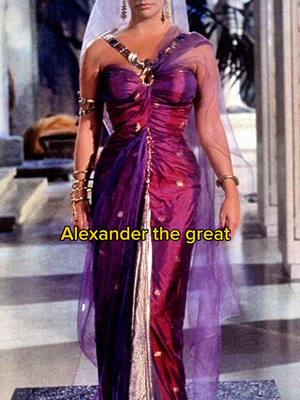
@frontoffice.co Tyrian purple. Beautiful dye or just marketing?

@frontoffice.co
TikTok · Talking Head Edit
@frontoffice.co Tyrian purple. Beautiful dye or just marketing?
Performance
Video #8174 · Talking Head Edit
[01]
The creator explains the history of Tyrian purple, a rare and expensive dye, to launch a philosophical discussion on whether rarity and value influence our perception of beauty. He contrasts Kant's idea of disinterested beauty with the reality of contextual perception, using ancient Rome as an example, before applying this paradox to modern consumerism and the difference between cheap and expensive goods, ultimately arguing that true value lies in meaning, craft, and history.
[02]
[03]
 183.3K15.3×Monologue on collapsing beauty standards@the.ryanexperience · Breakdown
 427.1KPhilosophical concept explains modern culture@orenmeetsworld · Opportunity Explainer
 502.3K16.4×Explaining synthetic luxury via truffles@orenmeetsworld · Breakdown
 321K1×Analysis of intellectualism as a trend@deathtostock · Breakdown
 2.4M79.6×Exposing synthetic luxury goods breakdown@orenmeetsworld · Breakdown
 296.7K23.5×Luxury brand suit quality critique@fineasjackson · Hot Take
 1.6M119.3×Explaining the 'tastewashing' tech trend@var.aunevik · Breakdown
 109.6K15.1×Cultural analysis using historical philosophy@davidkylechoe · Opportunity Explainer
 184.1KInterior designer explains why beige is a timeless neutral@lorenkreiss · Breakdown
 761.4K33.9×Explaining corporate aesthetic deception@var.aunevik · Breakdown
 183.9K8.5×Explaining cultural term with product@thisisantwon · Breakdown
 209.7K2.2×Philosophical breakdown of personal taste@curatingambiance · Breakdown
[04]
[05]
What stops the scroll in the first 3 seconds
Verbal hook · 70%
So historically speaking, this is one of the most expensive dyes we have ever produced.
Visual hook · 30%
A medium shot of a speaker addressing the camera directly with expressive hand gestures, creating an immediate sense of a direct, personal lecture.
[06]
Steal this for your own video
Historically speaking, is one of the most things we have ever produced.
[07]
The promise the opener makes, and how the video pays it back
Hook
Establish immediate authority and high stakes by presenting a superlative historical fact about the subject, creating instant intrigue.
Payoff
Delivers the concluding thesis, resolving the central conflict by proposing that true value lies not in the object's superficial qualities but in the meaning derived from its process, history, and the intention behind it. It offers a new, more profound way to understand and appreciate the world.
[08]
The structural pattern this video runs on
Framework
The Dialectical Deep Dive
To deconstruct the perceived value of a subject by introducing a historical anchor, posing a philosophical question, examining counterarguments, and resolving the tension with a new, more meaningful framework for understanding.
The Historical Anchor
Grounds the subject in a compelling historical context, using quantifiable data and high-status associations (e.g., royalty, famous figures) to establish its initial, accepted value.
The Philosophical Pivot
Transitions from factual exposition to a central, debatable question. This reframes the subject as a philosophical problem, challenging the initial assumptions about its value and inviting the audience to think critically.
The Classical Counterargument
Introduces an established philosophical or theoretical viewpoint that directly opposes the initial, context-based valuation. This presents a formal, 'objective' lens for analysis.
The Contextual Rebuttal
Counters the 'objective' viewpoint by arguing that perception is never neutral. Uses a vivid thought experiment or narrative scenario to demonstrate how context, story, and exclusivity pre-condition our experience of the subject.
The Modern Paradox
Introduces a modern technological or cultural development that complicates the original problem, creating a tangible paradox where two physically identical things have vastly different perceived values.
The Generalization Beat
Connects the specific, perhaps esoteric, subject to common, everyday examples. This makes the abstract philosophical problem universally relatable and relevant to the viewer's own life.
The Root Cause Diagnosis
Identifies and articulates the underlying modern condition that creates the central conflict, often framing it as a form of disconnection between a thing and its origin.
The Reframed Question
Dismisses the common, superficial binary question (e.g., 'good vs. marketing') as flawed and proposes a deeper, more meaningful question as the correct one to be asking.
Tyrian purple. Beautiful dye or just marketing?
Right. So historically speaking, this is one of the most expensive dyes we have ever produced. This is Tier purple, a famously rare natural dye made from sea snails. It takes 10,000 sea snails to make one gram of dye. And this purple dye enclosed was the choice of emperors, Cleopatra, Alexander the Great, as a show of beauty better also as a show of wealth, of power that they could obtain this dye. Soterian purple is valuable because it is rank. Better, does being rare and valuable influence how we view its beauty? Tier it become more beautiful? The interaction between beauty and rarity and value, we have been debating this for thousands of years. So philosophers like Immanuel Kant talk about the judgment of beauty as something that is disinterested. Does it have harmony? Does it have proportion? Does it have balance? These components exist independent of how rare something is or how much effort it took to make it. We should be judging Tier purple as beautiful regardless of how many sea snails it took to make them? 10,000 or five? But is that separation of objective and subjective meaningful or even realistic? Like we encounter beauty always in a context. Like imagine, we're in ancient Rome. Before we even see the color, we hear stories that this dye is three times more valuable than good. And then we see the emperor wearing Tier purple robes. And then we no that no one else is wearing that shade of purple. It is exclusive to him. So the way we see that color is already through various contextual contextual better. And when we finally see it, we see a color that's not very often seen in nature because we are literally looking at the dried mucus of a rare sea snail because the process is the product in this case. And our experience is the entire thing. But modern technology complicates this because now we have synthetic dyes, which can produce the exact same shade for cents instead of thousands of dollars. So now we can have two identical pieces of cloth, one made for cents and one made with 10,000 sea snails that are visually indistinguishable. One is valuable and one is no, But they are the same. And that modern problem extends to everything. We have a tier white t shirt. We have a $70 white t shirt. We have a $30 pair of jeans. We have a $300 pair of jeans. A $50 leather bad, a $500 leather bag. And then we encounter a very modern problem where we disconnect things from how they are made. And then I think we are forced into the wrong questions, like better something is objectively really good or just marketing. When the real question should best, does any of this have meaning? Tier purple is not beautiful just because of the shade of purple, but because of the craft it takes to harvest, to make, because it connects you to a long line of history. Like Japanese denim from Kaihara is not valuable just because of the physical characteristics, because it is made from a process that has intention and care. Those are values that you align with. Ultimately, dyes are just dyes, clothes are just clothes. Like, it's probably not worth having strong opinions about sea snails, but there is true optimism and joy to be found in things of meaning. Meaning is when we can appreciate both the process and the product. And when we have that harmony, we are reminded that beauty is not just what we can perceive, but what we can understand.