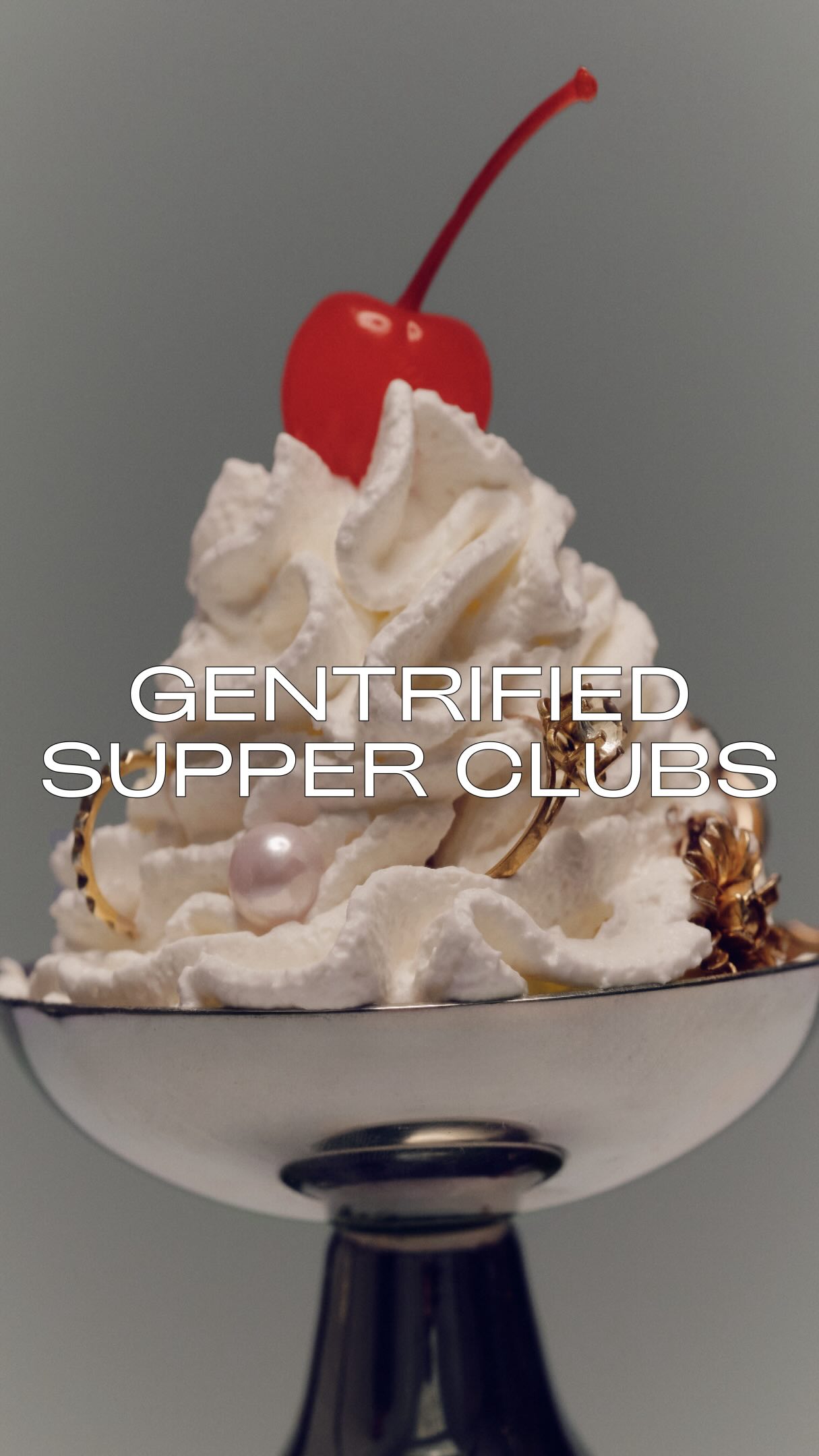
Post caption
having been to a lot of these lately, one thing is clear:
getting strangers around a table still makes a better impression than anything a brand can buy. but the content, the publicity, the talk around the dinner have become core to how these work now, which sits quite far from the underground rooms they take their name from.
is there a more meaningful way to do this? comment SUPPER CLUB for my research board
Transcript
The return of the supper club and the rise of food as a status symbol are happening at the same time for a reason. We've watched the supper club take new shape lately in cities like London and New York. They're held in restaurants by Instagram chefs bringing strangers together to slow down over carefully cooked food rank conversation. A huge part of the appeal is the underground nature of supper clubs. Functioning as a rejection of the ultra capitalist restaurant industry, they negate codes of traditional dining and marketing, and instead offer authentic community experiences and often take place in homes or unlicensed spaces. It's that exclusivity that generates their cool better, but like many subcultures, the supper clubs has now bled into the mainstream. We're now seeing the supper club as the next frontier of the third space experience economy. Brands, food bloggers, and celebrity chefs are serving more than just good. Elaborate tablescapes, fresh ingredients, organic wine, expensive locations. We watch as these increasingly garner the currency of taste and see that translating to status and this backdrop of economic and food instability. Supper clubs might have started as a way to slow down and bond over shared food and entertainment and be matched with strangers outside of algorithms. But as brands start infiltrating this space, are we being sold the performance of the supper club without its substance? Or is there a way for brands to get a curated group of people together in a room in a meaningful way? Having attended multiple supper clubs within this reinvention, one thing is clear. It's that getting a bunch of strangers around a table is a much more personal and meaningful way to make an impression. But I can't break away from the understanding that the content, the publicity, the talks surrounding these dinners are often a core element to their function, which strays away from the very origin of the underground supper club that they attribute their name name to. Comment supper club if you want my full research board. I mapped the shift from community better dining experiences no today's more polished, status driven reinvention of the supper club, making note of what's next in this space.