Post caption
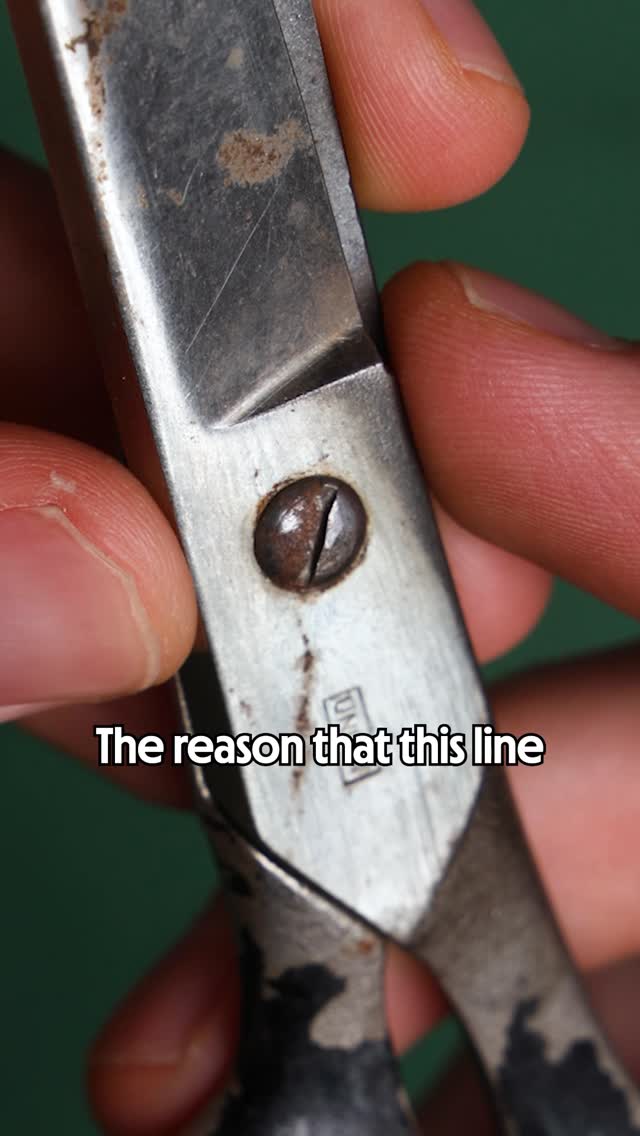
One benefit of a smoother transition line is that it allows for a smoother cut.
The jagged cutoff on most vintage scissors can snag itself on the material you are cutting through, especially if it's a longer material. A smoother transition from the blade to the handle helps the scissor slide more cleanly through. The functional difference is very marginal, but we thought it was worth sharing. Mostly, we just think it looks good.
What do you think of this little scissors detail? Was it worth the time?
Transcript
The reason that this line exists on most vintage metal scissors is because the scissor half always begins its life looking more like this one. When you're casting or forging blanks, you can't really build that exact taper into the casting or the forging, no that's why that shaping has to happen as a secondary process. When the grinding wheel has completed its best, basically, it stops. That is where the line is created. That's where the wheel stops grinding. But we saw some old examples that have a smoother transition where essentially the grinding is happening and then the scissors kind of slowly fade away, and it creates a nice soft curved transition. When we were designing our own scissors from scratch, it felt like we had this opportunity to consider every small detail. As you can see on the Chroma scissors, it's not just this flat, sharp shoulder. It actually creates this smooth transition. I'm curious to know if it's something that anybody else cares about, if anyone else, like, thinks that that's a improvement, if you guys prefer a sharper corner and a sharper edge to it. Yeah. Let me know what you think.