@frontoffice.co
TikTok · Talking Head Edit
@frontoffice.co Washi Paper Jeans

@frontoffice.co
TikTok · Talking Head Edit
@frontoffice.co Washi Paper Jeans
Performance
Video #18466 · Talking Head Edit
[01]
The creator shares a personal story about repairing a washi paper door in his late grandmother's apartment, which he broke as a child. He uses this narrative to launch into a detailed explanation of washi paper's history, material science, and unique properties. He then connects this traditional craft to his modern work as a designer, demonstrating how washi is transformed into a textile and used to create his brand's structured, wide-leg jeans, ultimately framing it as an act of autobiographical design.
[02]
[03]
 1.1M4.2×Personal story behind washi jeans@sakata.ken · Origin Story
 328.3K3.3×Explaining Japan's manufacturing decline.@frontoffice.co · Breakdown
 275.8K4.7×Designer shares jacket's personal story@yitaigeng · Origin Story
 79.2K2×Showcasing a niche clothing designer@readytowearfiend · Breakdown
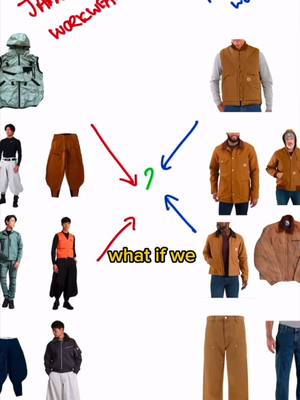 700.5K1.9×Deconstructing Japanese and American workwear@frontoffice.co · Breakdown
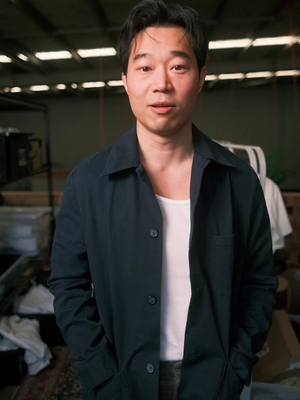 1.1M2.5×Explaining design philosophy through examples@frontoffice.co · Origin Story
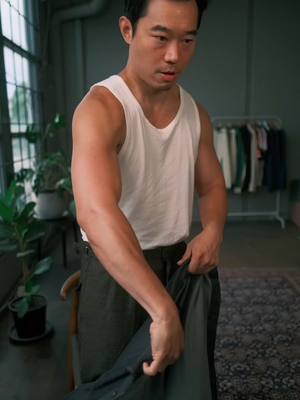 320.2KDesigner breaks down overshirt fabrics@frontoffice.co · Breakdown
 590K2×Jacket design process breakdown@sakata.ken · Breakdown
 1.6M4.9×Cultural trait explains niche manufacturing@sakata.ken · Strange but True
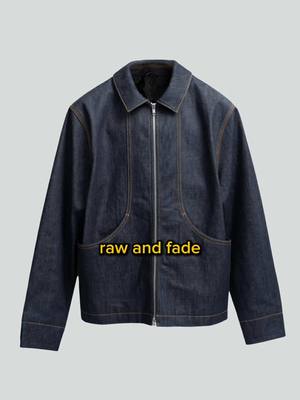 418.5K1.3×Explaining denim through Japanese philosophy@frontoffice.co · Breakdown
 282.7KFabric history and modern reinvention@frontoffice.co · Explainer
 490.9K3.4×Explaining Japan's inefficient craftsmanship culture@frontoffice.co · Case Study Breakdown
[04]
[05]
What stops the scroll in the first 3 seconds
Title hook · 35%
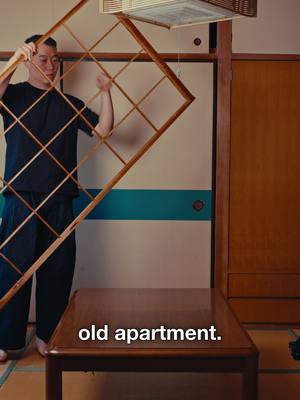
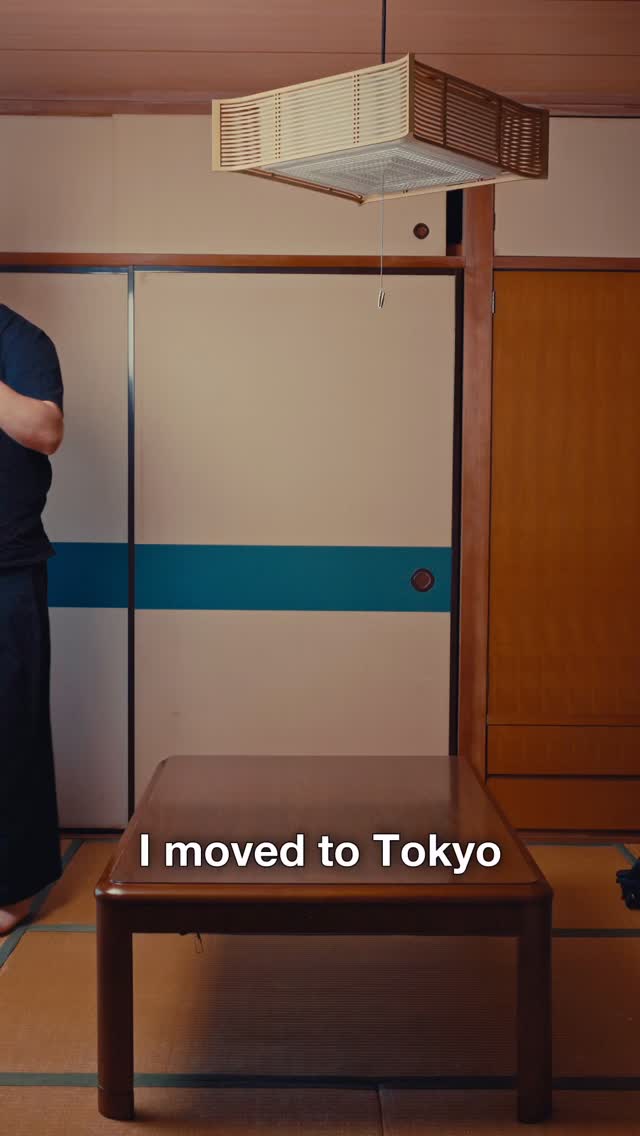
I moved to Tokyo
Verbal hook · 50%
I moved to Tokyo and I'm living in my grandmother's old apartment.
Visual hook · 15%
A man carries a large, traditional Japanese wooden shoji screen frame into a room, setting up a visually intriguing action.
[06]
Steal this for your own video
I and now I'm in .
[07]
The promise the opener makes, and how the video pays it back
Hook
An intimate, unresolved personal story involving a specific object, creating an emotional connection and a narrative loop that demands closure.
Payoff
The final beat connects the product's existence directly to the creator's personal journey and identity, providing both an intellectual ('I learned something') and emotional ('I feel the story's closure') sense of satisfaction.
[08]
The structural pattern this video runs on
Framework
The Autobiographical Bridge
Connecting a personal, historical anecdote to a deep-dive explanation of a core element, then pivoting to reveal how that element is used in an unexpected, innovative product, framing the product as the resolution to the initial story.
The Personal Anchor
Establish a personal history and emotional stake connected to a physical object, creating a mystery or unresolved tension from the past.
The Material Deconstruction
Shift from the personal story to an educational deep-dive on the core material of the object, explaining its origin and fundamental properties.
The Scientific Reveal
Magnify the focus to a microscopic or scientific level, revealing the material's 'secret' properties that give it unique advantages (e.g., light diffusion, moisture regulation).
The Conceptual Leap
Make a surprising pivot, proposing a completely different and unexpected application for the material just explained, bridging two seemingly unrelated fields (e.g., architecture to fashion).
The Familiar Benchmark
Ground the new, unfamiliar concept by comparing its key attributes to a well-understood, common equivalent, making the innovation easier to grasp.
The Innovation Process
Detail the specific engineering or creative process required to transform the material from its original form into its new application, answering the audience's 'how is that possible?' question.
The Product Synthesis
Reveal the final product, explaining the specific choices (e.g., material blends, ratios) that were made to optimize its performance.
The Design Justification
Connect the material's unique scientific properties directly to a specific design choice, proving why this innovation results in a superior aesthetic or functional outcome.
The Thematic Resolution
Circle back to the opening personal story, framing the final product not just as an object, but as the symbolic resolution of the initial narrative, imbuing it with personal meaning and identity.
Washi Paper Jeans
contextual · beginning
I moved to Tokyo
contextual · beginning
my grandmother's old apartment.
contextual · beginning
When I was a child I broke this wooden paper door.
contextual · beginning
It's waited 30 years for me to repair it.
informational · middle
Japanese doors are really interesting. They're made from Japanese paper called washi.
informational · middle
It has this really unique hollow structure
informational · middle
So as a material that has existed for a thousand years, it is surprisingly advanced.
contextual · middle
I've been thinking a lot about washi because not only can you use in doors, you can also use in clothes.
informational · end
Then you dry them and you twist them into yarn.
informational · end
we landed on a 50% cotton, 50% washi mix.
contextual · end
Ultimately it is autobiographical design
Moved to Tokyo and I'm living in my grandmother's old apartment. When I was a child I broke this wooden paper door rank shortly after I broke the door she had to move into assisted living. She passed away more than twenty years ago. At that point we were living in Australia. Now I'm here in Tokyo and I'm the first to live here since she passed and this door is still broken. It's waited thirty years for me to repair it. Japanese doors are really interesting. They're made from Japanese paper called washi. These are made from plant fibers worst commonly mulberry bark and that's grown in the mountain regions here in Japan. Washi paper is handmade in a very slow laborious process, but the paper it produces is really different too. It gives you these very long fibers. They're very strong, very durable, and that's part of the reason why it's used in these doors. And microscopically, it also is really interesting. It has this really unique hollow structure and that explains why light doesn't pass through. It sort of bounces around and gives the room a very soft flattering light. And that hollow structure also holds moisture. It can take away the water vapor in a room better also release it and that can give the room a very moderating influence for humidity. So as a material that has existed for a thousand years, it is surprisingly advanced. I've been thinking a lot about washi because not only can you use indoors, you can also use enclosed. Previously, I've designed jeans made from cotton rank cotton is the most common fiber. And the way that you distinguish premium cotton is the length of the staple, the length of the fiber. So things like Egyptian cotton, sea island cotton, they're known for their long staples. But you can achieve that with washi too. So what you have to do is you take the paper and you cut them into a very long strip. In fact, the tier fibers can be as long as you want them to be. Then you dry them and you twist them into yarn. And tier result is something that's even more durable, but also has those long fiber characteristics. It's also very useful because the thing same thing that regulates moisture in these doors also regulates moisture in your skin. We did a few different tests and we landed on a 50% cotton, 50% washi mix. But even then, you do have to use it in the right designs though because the washi gives it so much structure. So we decided on these wide shapes for men and for women. And I knew that the washi could help maintain and give it that architectural shape which you can't really get in cotton unless you made it thicker. So all in all, it's really interesting material science, engineering. Ultimately, it is autobiographical design, you no. It's the washi do all over again. It's about coming home from the Best and realizing my potential as a Japanese designer. It's not really about doing things in a better way or a Japanese way best keeping an open mind to the next way of doing things.