@frontoffice.co
TikTok · Talking Head Edit
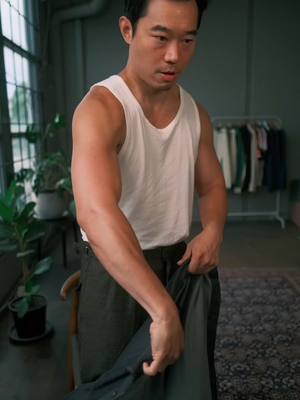
@frontoffice.co Front Office Overshirts I’m working on. Probably headed for a March/April release I think, it’s a hectic year! #fashiondesigner #melbournefashion #streetwear

@frontoffice.co
TikTok · Talking Head Edit
@frontoffice.co Front Office Overshirts I’m working on. Probably headed for a March/April release I think, it’s a hectic year! #fashiondesigner #melbournefashion #streetwear
Performance
Video #8182 · Talking Head Edit
[01]
The creator explains his design process for overshirts, focusing on the interplay between texture and structure. He contrasts fuzzy vs. smooth fabrics, opting for a sleek look, and then deconstructs what creates smoothness (consistent weave) and structure (tight weave and thickness). After dismissing common shirting fabrics for lacking shape, he details his search in Japan for exotic, tightly-woven yet thin fabrics, ultimately showcasing two final choices: a crisp 'typewriter cloth' cotton and a rare 'wool denim', demonstrating how each achieves the desired balance of smoothness and structure.
[02]
[03]
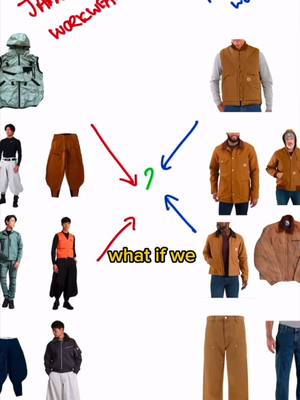 700.5K1.9×Deconstructing Japanese and American workwear@frontoffice.co · Breakdown
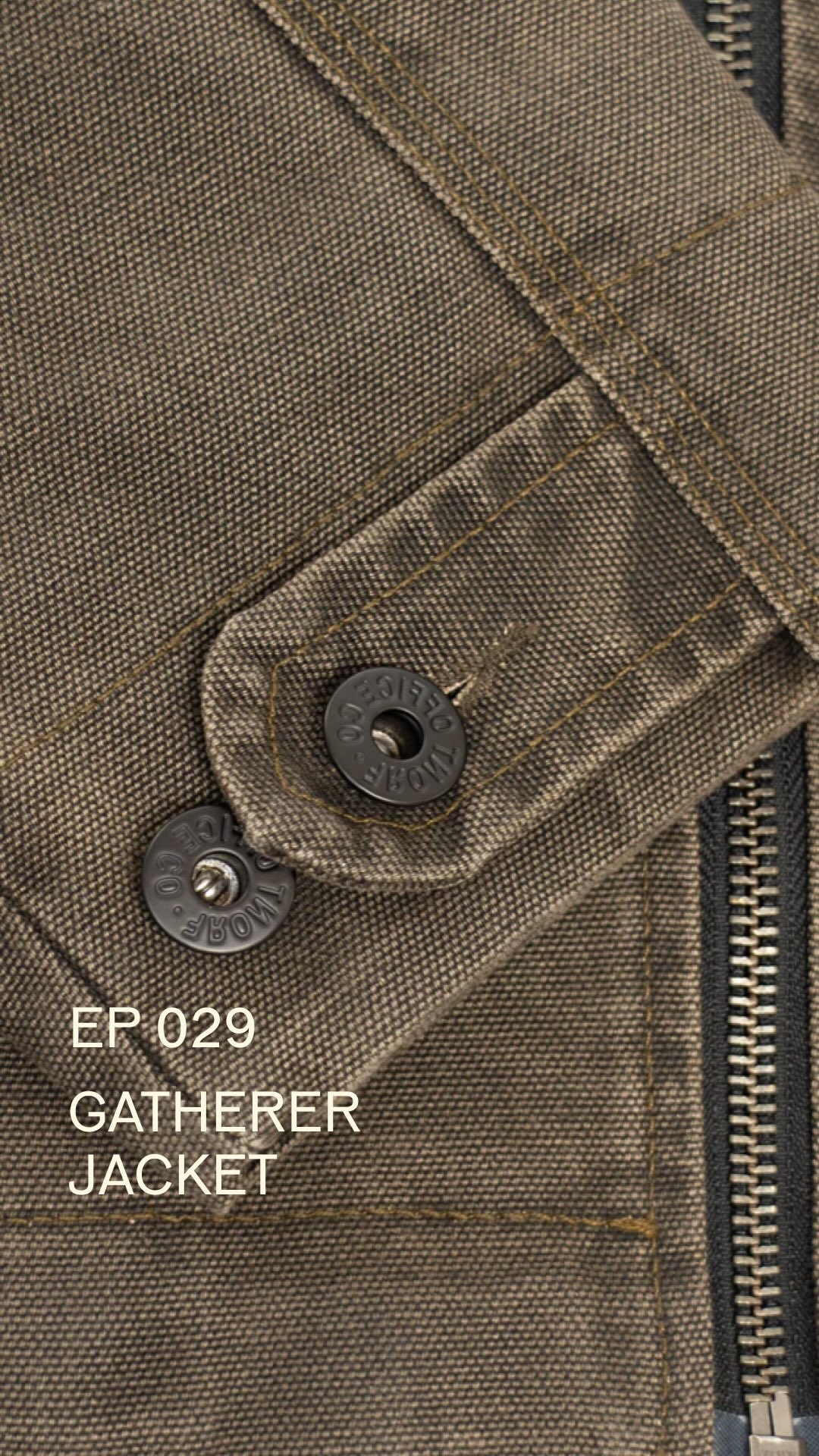 590K2×Jacket design process breakdown@sakata.ken · Breakdown
 4.2M13.9×How three cultures designed for heat@frontoffice.co · Breakdown
 1.1M14.4×Designer shows mistake and fix@yitaigeng · Origin Story
 354.8KDesigner shows jacket creation process@frontoffice.co · Origin Story
 3M5.5×Comparing workwear styles, creating hybrid jacket.@frontoffice.co · Case Study Breakdown
 278.1K19.4×Explain hoodie quality and pricing@fineasjackson · Breakdown
 103.9K1.9×Explaining true T-shirt quality history@gents.studios · Breakdown
 210.4K27.3×Five hidden clothing quality signs@gents.studios · Breakdown
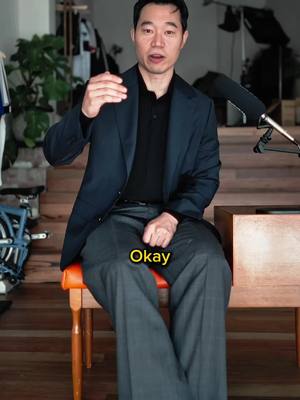 655.4K3.5×Wool science and fabric choices@frontoffice.co · Breakdown
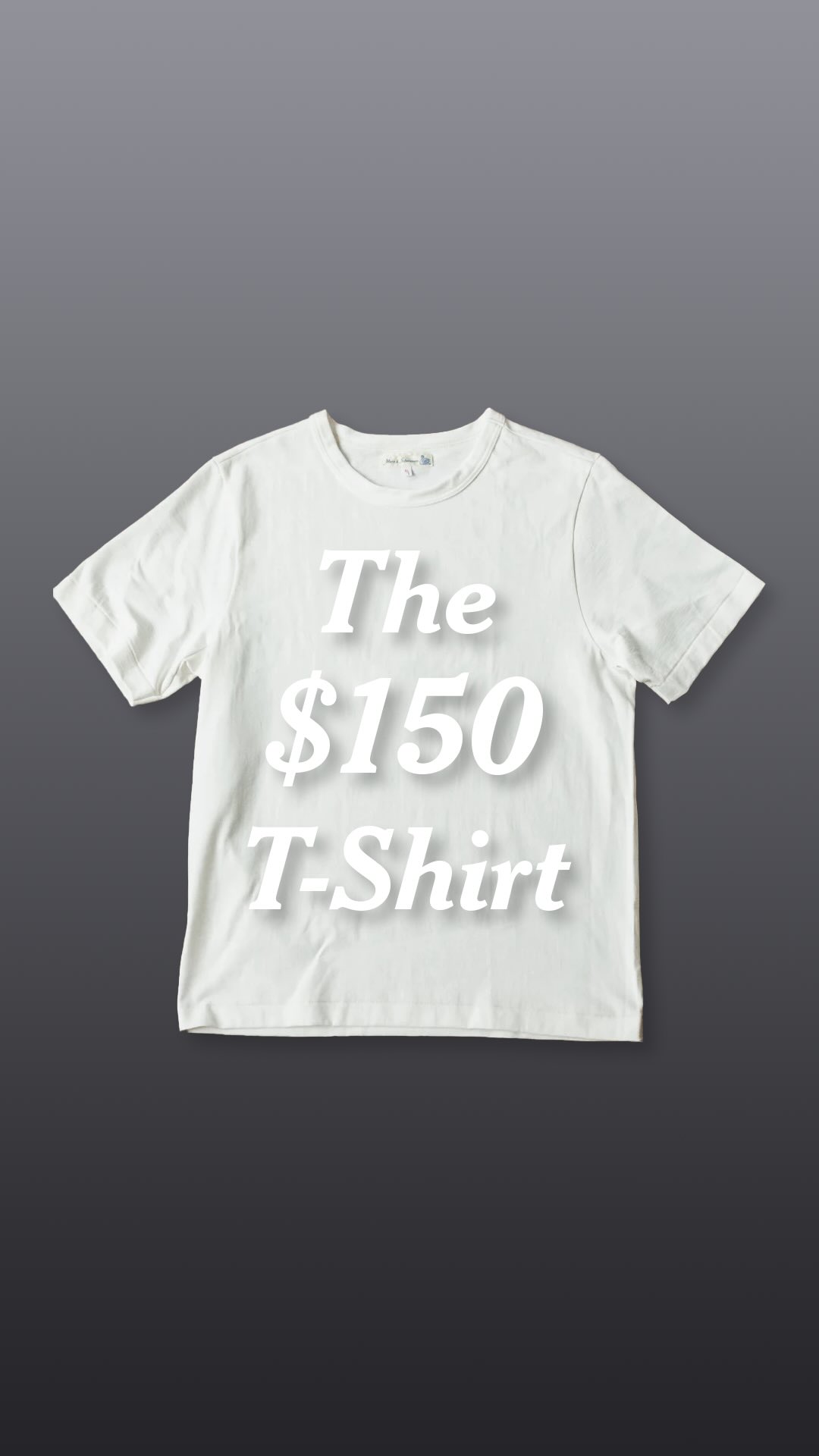 1.6M2×Explaining luxury t-shirt manufacturing process@alextwma · Opportunity Explainer
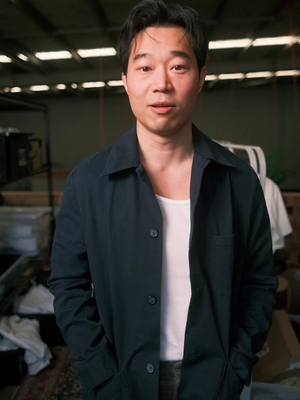 1.1M2.5×Explaining design philosophy through examples@frontoffice.co · Origin Story
[04]
[05]
What stops the scroll in the first 3 seconds
Verbal hook · 45%
That that's the sound you want. That's the sound.
Visual hook · 55%
The video opens with the creator in motion, lifting a dark shirt over his head, creating immediate action and a distinct rustling sound that ties into the verbal hook.
[07]
The promise the opener makes, and how the video pays it back
Hook
Initiates with an intriguing, non-obvious sensory detail, creating a mystery that the rest of the video will solve.
Payoff
Brings the narrative full circle by returning to the initial sensory hook and providing a technical explanation for it. This delivers both intellectual and sensory satisfaction, confirming the success of the quest.
[08]
The structural pattern this video runs on
Framework
The Expert's Quest
A narrative framework that transforms a product reveal into a compelling story by framing it as the solution to a complex, technical problem that required an expert's journey to solve. It builds value through process and expertise, not just features.
The Design Mandate
Clearly states the core objective and defines the key variables or constraints that will guide the creative process.
The Contrarian Choice
Presents a common or expected approach and deliberately rejects it in favor of a more difficult, nuanced path, establishing a unique point of view.
The Technical Deconstruction
Breaks down the desired outcome into its fundamental principles, demonstrating deep expertise and educating the audience on the 'why' behind the 'what'.
The Central Paradox
Articulates a core conflict or 'impossible' challenge within the design constraints, framing the problem as one that requires a special solution.
The Quest Narrative
Frames the search for a solution as a journey or dedicated effort, elevating the final product from a simple choice to a hard-won discovery.
The Solution Showcase
Presents the resulting products or solutions, explicitly connecting their unique properties back to the previously established technical problem and paradox.
Front Office Overshirts I’m working on. Probably headed for a March/April release I think, it’s a hectic year! #fashiondesigner #melbournefashion #streetwear
Okay. That that's the sound you want. That's the sound. So we are designing overshirts. So an overshirt is in contrast to the undershirt, which is something like this, like Tier shirts, tanks. We have to think in terms of opportunities, and opportunities are to change the texture and the shape. So we'll start with texture. We could go in the direction of a more of a fuzzy, tactile, overshirt like this from Corridor. So I'm thinking about going the other way. Something that's a bit more smooth, sleek, but with a bit of shape to it. Kind of like an eighties, nineties Italian look to it. In terms of texture, similar to what this shirt, Jacob Elordi, is wearing. But what makes things smooth? The perception of smoothness is because the fabric is woven extremely consistently. So there are no bumps and valleys. So that it feels flat. So we can start to think about fabrics that are commonly used for business shirts, like, oxfords, poplains, broadcloths. The problem with those fabrics is although they're very smooth, they don't give us enough shape. So what gives things structure? And there are lots of different factors. But the main two factors are how tightly woven the fabric is and how thick it is. But this is an overshirt. We don't want a thick fabric. We want a fabric that's super smooth, really consistent, tightly woven, but we don't want it thick. Then we start to get into the realm of exotic fabrics that not many people make and are not commonly available. But that's okay. That's kind of what we do. So I had to go to Japan twice over the last nine months to figure out what sort of fabrics will work out. And I came home with two fabrics, both solving the same problem in different ways. This is the first one. Shirt number one, really smooth cotton, and that's woven into something called a typewriter cloth. And they call it typewriter cloth because it is similar to a typewriter ribbon, which is a component of a typewriter. It's probably an outdated reference now. So really smooth and ultra tightly woven and incredibly thin. And that dense weave gives us a lot of shape in the arms, a lot of shape in the body. I've put these really big pockets in because of an overshirt, so it's like that sort of in between, a shirt and a light jacket. I love this shirt. For where I live in Melbourne where the weather is temperate and temperamental, you're always throwing stuff like this on and off. Okay. Shirt number two. This fabric is way too expensive, and I shouldn't have bought it, but I did. The thing about this wool is that it is a wool denim. Wool it's wool woven into a denim weave, but has a really nice hand feel, really smooth, but also is because it's so densely woven, it gives us that structure in the arms, structure in the bad. Really wild fabric. Now wool denim is like wool denim is not a thing. Like, no one really makes this. You no, the Japanese rank. And the thing about these really thin, tightly woven fabrics is that whenever you put them on, they leave a very satisfying sound to it. And that combination of a tightly woven fabric as well as the density of the fabric traps that pocket of air and creates that sand and lets me know that I've done the right job and I found the right fabric. Details.