@sakata.ken
Instagram · Talking Head Edit
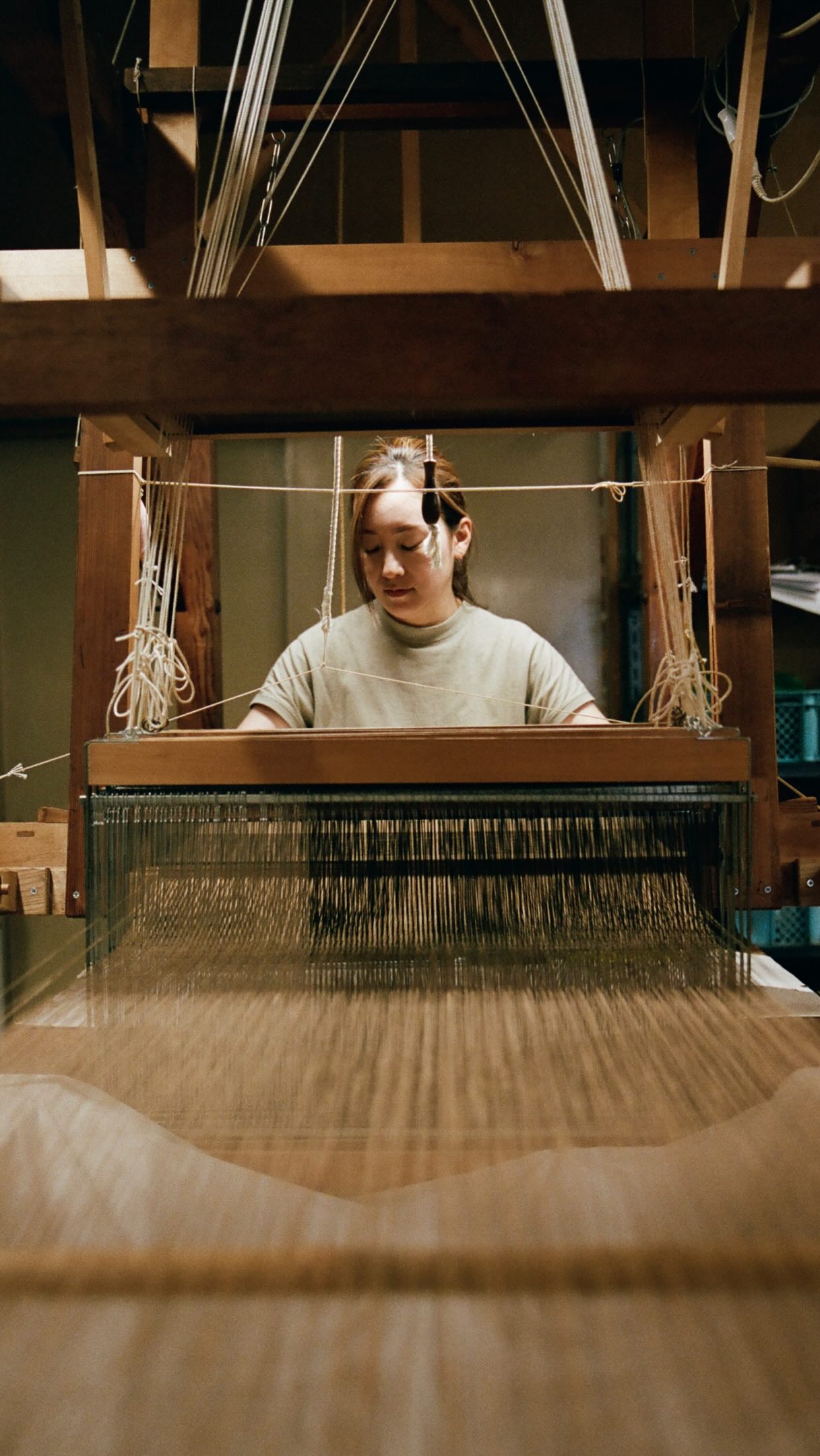
@sakata.ken A Japanese fabric mill has replaced their automatic steel machines and reverted back to wooden frames. I went north of Kyoto to find out why @kuska1936 📹 @alisa.yamada

@sakata.ken
Instagram · Talking Head Edit
@sakata.ken A Japanese fabric mill has replaced their automatic steel machines and reverted back to wooden frames. I went north of Kyoto to find out why @kuska1936 📹 @alisa.yamada
Performance
Video #41283 · Talking Head Edit
[01]
The creator explains the counter-intuitive business decision of a Japanese silk factory owner who, instead of modernizing, sold his automated steel machinery to bring back traditional wooden looms and skilled artisans. He profiles the owner, Yasuhiko Kusunoki, and details the historical context of silk production in Tango, Japan, framing the owner's choice as a deliberate pivot from prioritizing efficiency to prioritizing beauty and quality.
[02]
[03]
 1.6M4.9×Cultural trait explains niche manufacturing@sakata.ken · Strange but True
 490.9K3.4×Explaining Japan's inefficient craftsmanship culture@frontoffice.co · Case Study Breakdown
 328.3K3.3×Explaining Japan's manufacturing decline.@frontoffice.co · Breakdown
 1.6M2×Explaining luxury t-shirt manufacturing process@alextwma · Opportunity Explainer
 377.8KFounder's problem-solving business story@frontoffice.co · Origin Story
 1.1M4.2×Personal story behind washi jeans@sakata.ken · Origin Story
 320.2KDesigner breaks down overshirt fabrics@frontoffice.co · Breakdown
 79.2K2×Showcasing a niche clothing designer@readytowearfiend · Breakdown
 282.7KFabric history and modern reinvention@frontoffice.co · Explainer
 418.6K7.6×Brand owner's sourcing trip montage@orenmeetsworld · Value Vlog
 417.5K7.9×Personal story explains material science@frontoffice.co · Origin Story
 418.5K1.3×Explaining denim through Japanese philosophy@frontoffice.co · Breakdown
[04]
[05]
What stops the scroll in the first 3 seconds
Verbal hook · 65%
Typically, when factories modernize, they get rid of their people, they get rid of their old machines, and replace them with automated systems.
Visual hook · 35%
A direct-to-camera shot of the speaker is quickly followed by a cut to a woman actively working at a large, traditional wooden weaving loom, creating immediate visual contrast and curiosity.
[06]
Steal this for your own video
Most businesses modernize by replacing with —but this one did the opposite.
[07]
The promise the opener makes, and how the video pays it back
Hook
Establish a widely accepted modern practice, then immediately introduce a subject that does the exact opposite, creating a powerful 'Why?' question.
Payoff
Codify the protagonist's new direction into a simple, compelling philosophy and then immediately pivot to a new, more specific question that this philosophy raises, acting as a cliffhanger for a subsequent part.
[08]
The structural pattern this video runs on
Framework
The Contrarian's Gambit
To create intrigue by establishing a universal industry norm and then showcasing a subject who deliberately and successfully defies it, leaving the audience with a new question about the subject's unique philosophy.
The World & The Stakes
Ground the story in a specific, credible setting and provide historical context to explain why the subject's contrarian approach is so significant and difficult.
The Protagonist's Crossroads
Introduce a central character and frame their situation as a high-stakes decision between conforming to the established norm for survival or choosing a different, riskier path.
The Defiant Motivation
Reveal the protagonist's counter-intuitive choice and explain the deeper, value-based reasoning behind it, positioning them as a visionary maverick.
A Japanese fabric mill has replaced their automatic steel machines and reverted back to wooden frames. I went north of Kyoto to find out why @kuska1936 📹 @alisa.yamada
Typically, when factories modernize, they get rid of their people, they get rid of their old machines, and replace them with automated systems. This one Japanese factory is doing things the opposite way. They got rid of their steel machines and have brought back people and their machines are now made out of wooden frames. What is going on? It's happening here in Tango, historically Japan's capital of silk production. Silk production here historically has been for silk kimonos, and this got accelerated with industrialization. Mechanization has replaced almost every step of the process across weaving, finishing, and distribution. So this is Yasuhiko Kusunoki. He's the third generation owner of his family business, Kuska. When he takes over the business at age 30, he has to make a set of decisions. What are we going to do? To compete, he needs to get even faster, even more efficient. And against the wishes of his peers and his family, he decides not to. Silk has been his family business for three generations, and he sees a big gap to the silk that they are producing and the quality that they could be. He then sells all of the mechanical equipment. So instead of efficiency, he is now going to prioritize beauty. But what does that mean for silk? He starts thinking about what makes silk.