@alextwma
Instagram · Talking Head Edit
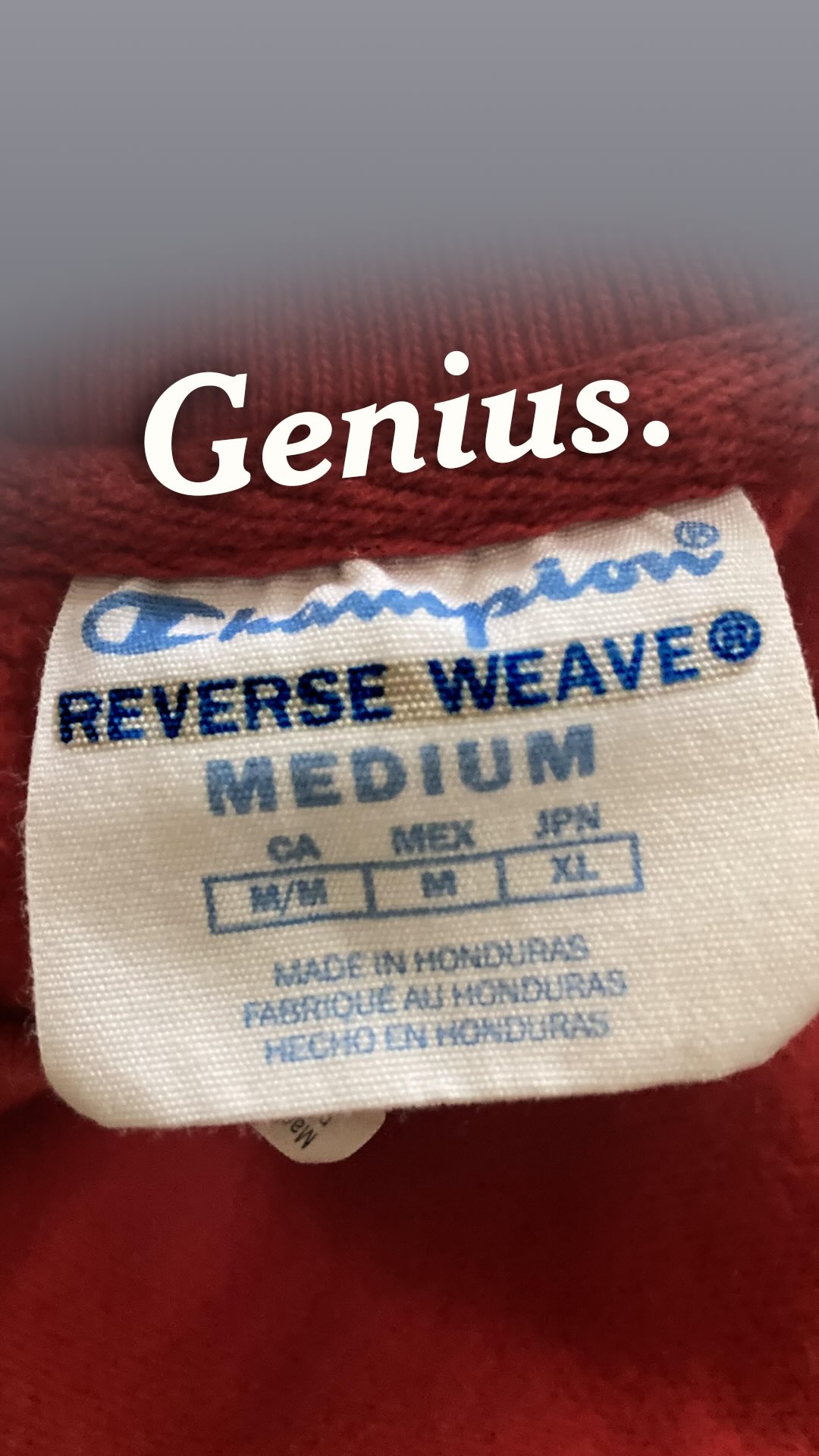
@alextwma What is a “reverse weave” and how did it redefine athletic clothing?

@alextwma
Instagram · Talking Head Edit
@alextwma What is a “reverse weave” and how did it redefine athletic clothing?
Performance
Video #46432 · Talking Head Edit
[01]
The creator explains the common problem of vertical shrinkage in cotton clothing and tells the origin story of how the brand Champion solved it in the 1930s. He breaks down the technical innovation of rotating the fabric weave 90 degrees to create the 'Reverse Weave,' which shifted shrinkage from the length to the width. The creator then traces the garment's history, from its adoption by athletic programs and the military to its rise as a coveted item among Japanese vintage collectors and its eventual collaborations with major streetwear brands, cementing its status as an iconic piece of fashion history.
[02]
[03]
 2M5×Explaining hoodie design problem-solving@frontoffice.co · Breakdown
 282.7KFabric history and modern reinvention@frontoffice.co · Explainer
 103.9K1.9×Explaining true T-shirt quality history@gents.studios · Breakdown
 349KWhy durable clothes still create waste.@frontoffice.co · Breakdown
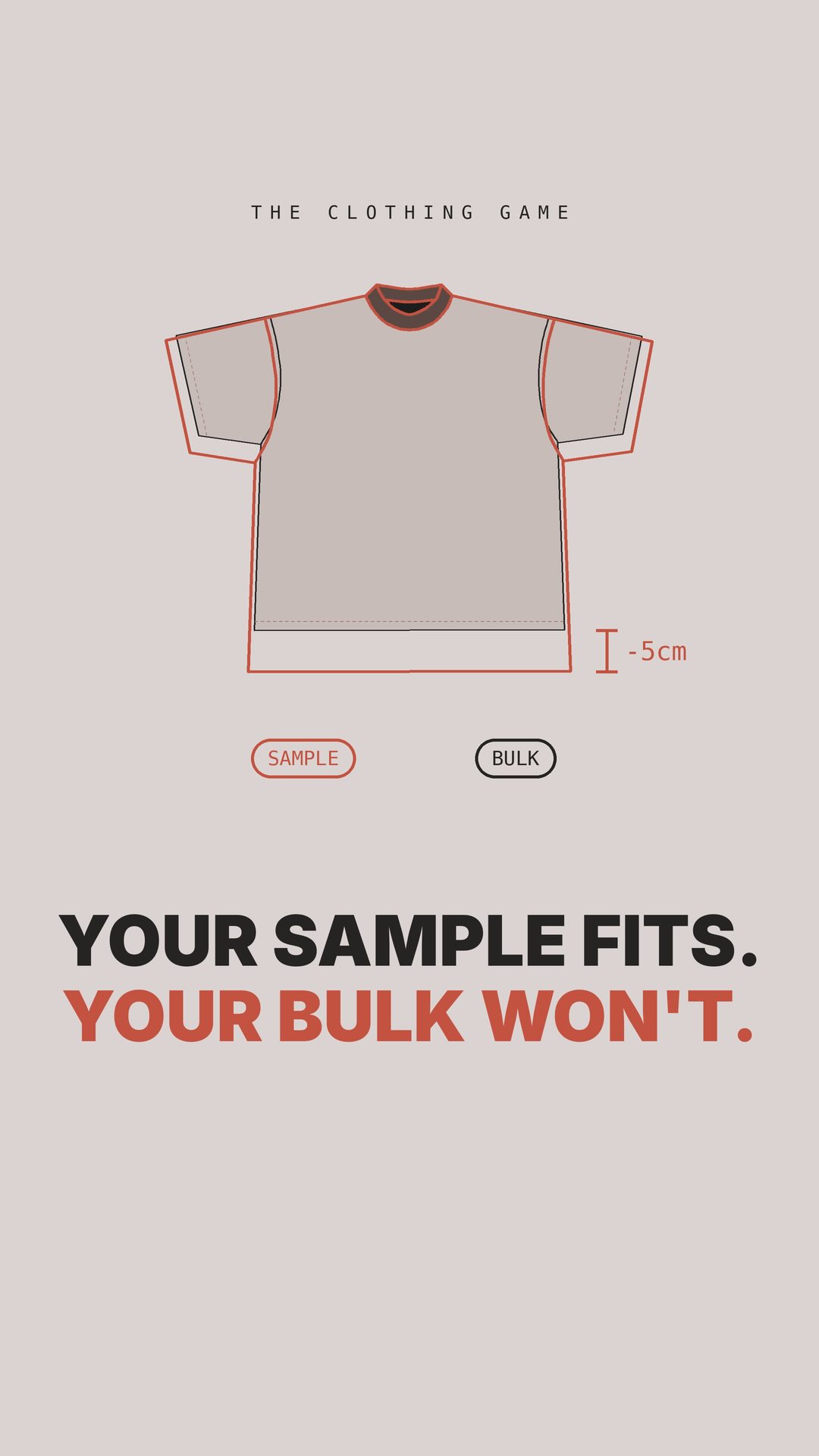 78.1K6.8×Explains clothing shrinkage problem fix@theclothinggame_ · Opportunity Explainer
 1.6M2×Explaining luxury t-shirt manufacturing process@alextwma · Opportunity Explainer
 278.1K19.4×Explain hoodie quality and pricing@fineasjackson · Breakdown
 320.2KDesigner breaks down overshirt fabrics@frontoffice.co · Breakdown
 321.1KStreetwear design history personal project@collspringer · Origin Story
 153.2K1.4×Brand origin story and product showcase@iamnotyethome · Origin Story
 2.4MDIY sweatshirt upcycling process video@upcyclex · Process
 156.4KExplaining sustainable fashion thread tech@alextwma · Breakdown
[04]
[05]
What stops the scroll in the first 3 seconds
Verbal hook
You've thrown away clothes because of this problem.
Visual hook
A medium shot of the speaker directly addressing the camera while making an emphatic fist gesture to illustrate his point, creating immediate personal connection and visual emphasis.
[07]
The promise the opener makes, and how the video pays it back
Hook
Identifies a common, frustrating problem the viewer has personally experienced and immediately teases an incredibly simple, almost unbelievable solution, creating an immediate knowledge gap.
Payoff
Delivers a concise, philosophical takeaway that reframes the entire story as a universal lesson about creativity, perspective, or problem-solving, leaving the viewer with a profound thought.
[08]
The structural pattern this video runs on
Framework
The Innovation Cascade
Deconstructing the history of a single, simple innovation to reveal its massive, unforeseen cultural impact, framing it as a lesson in problem-solving.
The Problem Deconstruction
Visually and verbally explains the technical root cause of the initial problem, educating the viewer and establishing the stakes.
The Historical Crucible
Establishes the historical context and the key players who faced the problem at a high-stakes level, grounding the story in a specific time and place.
The Counterintuitive Pivot
Reveals the simple, elegant, and non-obvious solution that the key player implemented to solve the problem.
The Scientific Payoff
Explains the scientific or logical principle behind why the simple solution works, providing a satisfying 'aha!' moment for the viewer.
The Innovation Ripple Effect
Shows how the initial solution led to a series of secondary innovations and improvements, expanding the scope of the original idea.
The Cultural Adoption Cascade
Traces the journey of the innovation as it is adopted by progressively larger and more influential groups, demonstrating its growing significance.
The Unexpected Renaissance
Introduces a surprising twist where the innovation is rediscovered, re-contextualized, and elevated to a new level of appreciation by an outside group.
The Legacy & Canonization
Solidifies the innovation's iconic status by showcasing its influence on modern culture, its adoption by revered figures, and its recognition by prestigious institutions.
What is a “reverse weave” and how did it redefine athletic clothing?
You've thrown away clothes because of this problem. It took champion one decision to fix it. They rotated a piece of fabric 90 degrees. That's it, and it changed everything. The problem is shrinkage, specifically vertical shrinkage. Cotton fibers run vertically in standard knit fabric, and every time you wash it heat and water pull those fibers better, so your sleeves creep up and your hem rises. Eventually a perfectly good garment doesn't fit anymore. In 1934 Champion was supplying sweatshirts to university athletic programs across The US. Coaches were washing entire batches of athletic wear after every practice and the garments kept rank. So Champion did something counterintuitive, they rotated the fabric 90 degrees and cut it on the cross grain instead. By running the fibers horizontally instead of vertically, shrinkage now happened across the width instead of the length. Width shrinkage is barely noticeable because your body fights it. Your shoulders, best, and hips constantly push outward against the fabric, but length shrinkage has nothing resisting it. No part of your body pulls the hem back down, So one simple rotation solved the entire problem. They patented it in 1938 and called it the worse weave. Champion added ribbed side panels to compensate for the increased width shrinkage which also gave the garment additional stretch and range of motion. And then they sewed a hood onto one of them and created the first ever hoodie. Sports teams across America adopted these changes immediately, then universities, then the military, and then something unexpected happened. Japanese collectors discovered it. Thrift stores in Japan began importing bales of used American clothing specifically so enthusiasts could sort through them looking for vintage Champion pieces. The heavyweight cotton, ribbed side panels, the cross grain construction gave it a durability and drape nobody had replicated. Virgil Abloh collaborated with Champion. Supreme, Stucy, ci and Bape all adopted the construction too. In 2017, the Museum of Modern Art selected the Champion Worse Weave Hoodie for their exhibition on garments that fundamentally changed the way humans yes, because that's what it did. The hardest design problems are rarely solved by the most complex answers. Instead of trying to invent some new material or new machine, they just reframed the question. Not how do we stop it from rank, but which direction is it pointing? You could say one rotation of their perspective led to one rotation of the fabric, and one of the most influential garments in fashion history.