@frontoffice.co
TikTok · Talking Head Edit
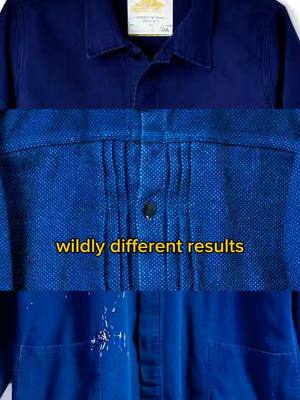
@frontoffice.co Three designers take on the blue French Work jacket with different results.

@frontoffice.co
TikTok · Talking Head Edit
@frontoffice.co Three designers take on the blue French Work jacket with different results.
Performance
Video #6709 · Talking Head Edit
[01]
The creator presents a comparative analysis of the classic blue French work jacket as interpreted by three different designers. He first establishes the jacket's historical origin as functional workwear, then details how Le Mont St Michel preserves this heritage, how Momotaro remixes it with Japanese cultural elements, and how Joy Mao uses it to comment on the nature of labor in fashion. He concludes by framing the three jackets not as competitors, but as representations of different design philosophies: preservation, cultural fusion, and social commentary.
[02]
[03]
 909.7K1.9×Comparing three takes on one jacket@frontoffice.co · Case Study Breakdown
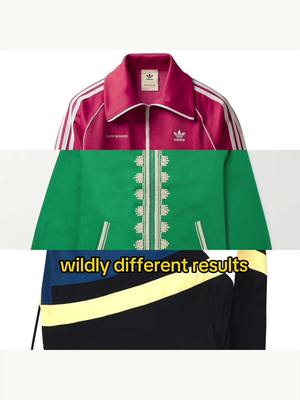 770.1K1.7×Comparing three designers' jacket interpretations@frontoffice.co · Case Study Breakdown
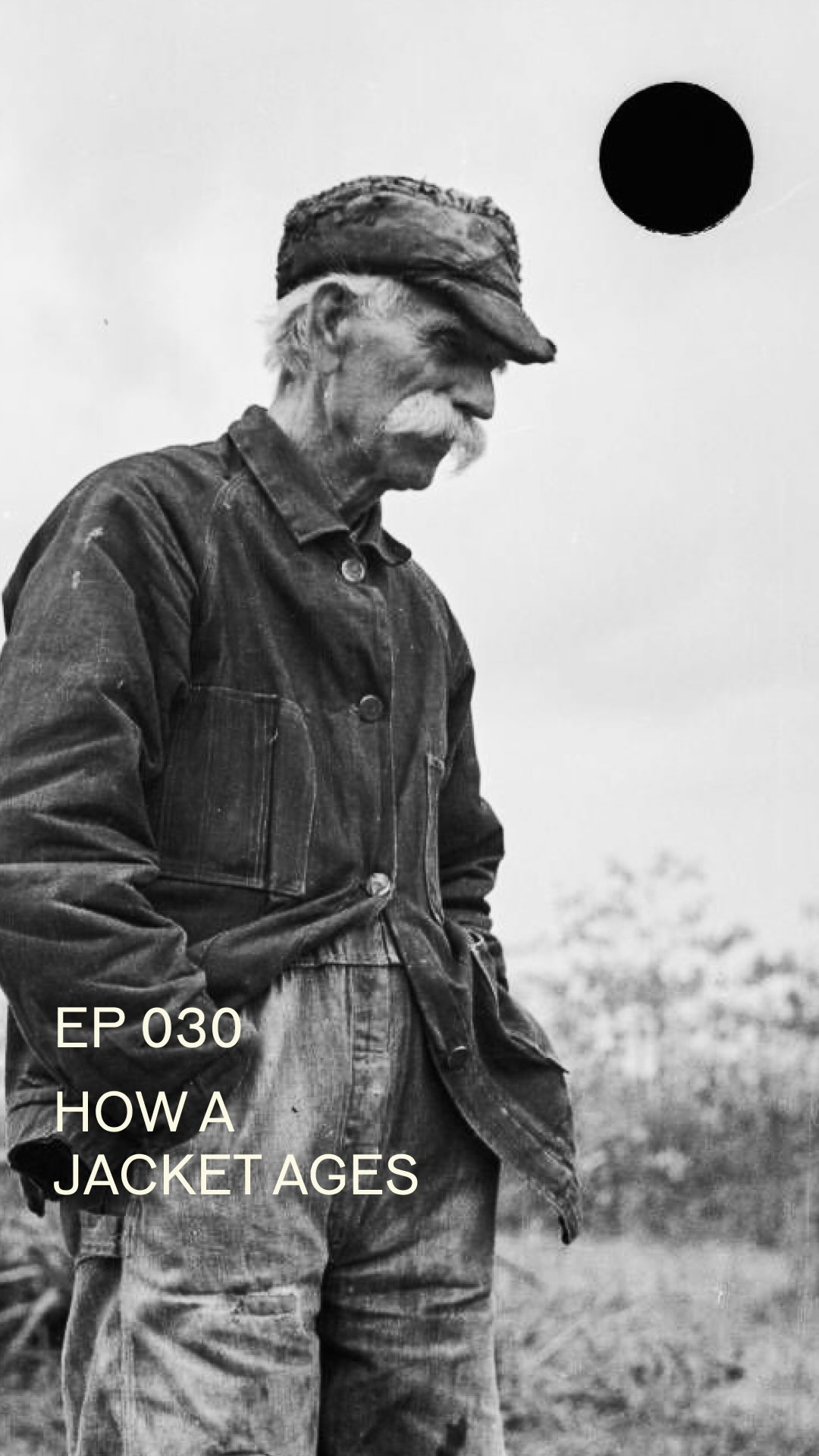 426K1.5×Explaining why we buy durable jackets@sakata.ken · Breakdown
 596.2K1.9×Cultural fashion exchange explained@frontoffice.co · Breakdown
 599.1KExplaining workwear's historical fashion origin.@frontoffice.co · Breakdown
 499.1K145.7×Historical breakdown of streetwear origins@henrythekid · Culture Profile
 459.8K87.6×History of rebel fashion explainer@henrythekidd_ · Breakdown
 150.1K1.3×Explaining military origins of fashion@henrythekidd_ · Origin Story
 164.3KExplaining a sold-out jacket's success@thisisantwon · Case Study Breakdown
 306.5K1.9×Tailoring styles explained by expert@frontoffice.co · Breakdown
 1.1M79.5×Historical breakdown of trench coats@fineasjackson · Breakdown
 118K18.3×Explaining fashion's influence on anime@gsnwilliams · Breakdown
[04]
[05]
What stops the scroll in the first 3 seconds
Title hook · 45%
I'll tell you a story
Verbal hook · 35%
I'll tell you a story.
Visual hook · 20%
A medium shot of a speaker cuts immediately to a split-screen montage of three different blue jackets, creating a visual comparison and intrigue.
[07]
The promise the opener makes, and how the video pays it back
Hook
A comparative premise is established, promising to show how one core item can be interpreted in 'wildly different' ways, creating immediate curiosity.
Payoff
The narrative is reframed from a competitive comparison ('who is best?') to a philosophical choice. The creator declares the question of 'best' irrelevant and instead empowers the viewer to decide which of the three presented 'ideas' or 'stories' resonates most with them, making the conclusion personal and thought-provoking.
[08]
The structural pattern this video runs on
Framework
The Thematic Trio
To analyze three distinct interpretations of a single, iconic object, escalating in conceptual complexity to reveal that the 'best' version is subjective and depends on the story one connects with.
The Foundational Context
Establishes the origin story and core identity of the base object. This provides the historical and functional benchmark against which all subsequent variations will be measured.
Item 1: The Archetype
Presents the first variation as the purest, most faithful interpretation. It's framed as the story of 'Heritage' and 'Preservation', serving as the control group for the analysis.
Item 2: The Synthesis
Introduces the second variation as a cultural fusion or remix. It demonstrates how the original object's core elements can be replaced with culturally equivalent counterparts, telling a new, global story of 'Synthesis'.
Item 3: The Deconstruction
Presents the third variation as a conceptual critique. It uses a 'Surface vs. Reality' reveal (an apparent flaw is actually a meticulous detail) to tell a story of 'Commentary' on a deeper issue related to the object's context.
Three designers take on the blue French Work jacket with different results.
contextual · beginning
three designers
contextual · beginning
French work jacket
contextual · beginning
Le Mont St Michel
contextual · middle
story about 'legacy'
contextual · middle
brand No. 2
contextual · middle
Momotaro
informational · middle
sashiori fabric
informational · middle
Japanese indigo
contextual · middle
a global story
contextual · middle
design No. 3
contextual · middle
illusion versus reality
informational · end
meticulously embroidered
informational · end
labour in fashion is frequently overlooked
I'll tell you a story. So three designers take on the same jacket with wildly different results. The jacket in question is the blue French work jacket. In the late 1800s, early 1900s, this jacket was designed for French laborers that needed something durable, needed something practical for real worse. Functional, simple, unpretentious. And it symbolized this democratic ideal of what workwear should be. So brand number one is LaMonte Saint Michel and their blue cotton work jacket is the blueprint. It remains almost unchanged from the early 1900s. Still uses blue cotton moleskin that's meant to be functional, durable and it wears beautifully over time. But if you really think about it, this story of practicality, of utilitarianism, that's the story that this company told in 1913. Because if this company tried to keep up and still tell the story of modern worse, their jackets will look dramatically different a hundred years later. But today, this is a modern company. The big idea that they are trying to communicate is heritage, tradition, timelessness. This is now a story about legacy. And now we get to brand number two, Momotaro, which is a denim company from Japan. So what they do is they recognize the tradition, the classic French silhouette. And what they do is they remix it. They've swapped out the cotton moleskin for a sashiori fabric and this fabric has its own historical origins in Japanese worse. And it was the classic fabric for farmers, for laborers, later used in martial arts as well. And that classic French blue is now a Japanese indigo and that natural dyed indigo also has a traditional worse history history in Japan. No it's really important to note that although they're a Japanese company, they didn't just randomly put Japanese elements in there. This is a very intentional process, replacing functional elements for other functional elements. And in doing no, you preserve the spirit of worse, but with other cultural elements. And the result is that you are telling a global story of worse. A global story of farmers, laborers from all over the world. And now we get to design number three, Joy Mao. And it plays with this idea of illusion versus reality. It's blue. It's got these functional pockets. It's made out of cotton twill, and it's got these paint splashes on it. I hate to say it, but we've seen this stuff before. I mean, what is the point? But if you take a look closely at these paint splatters, you realize that they're not paint. It's embroidered. Because these paint splatters make us think of something that's carefree, messy, not intentional. But in her work, these splashes are meticulously embroidered. And the big idea that she's trying to get across is that labor in fashion is frequently overlooked and really undervalued. And she's literally showing us the gap between what we see, the superficial image that we see, and the actual act of worse. A really thoughtful, smart execution. But ultimately, who makes the best tier jacket is an irrelevant question. It's about which ideas resonate the most with you. Is it the preservation of history? Is it telling a global story of worse? Or is it telling a story about invisible overlooked labor? Even though these are all blue work jackets, it shows us the capacity for design to tell very different stories in something that looks so similar.