@fineasjackson
Instagram · Talking Head Edit

@fineasjackson $200 for a cotton t-shirt…why? How is that even possible? #fashion #cotton #tshirt

@fineasjackson
Instagram · Talking Head Edit
@fineasjackson $200 for a cotton t-shirt…why? How is that even possible? #fashion #cotton #tshirt
Performance
Video #17214 · Talking Head Edit
[01]
The creator poses the question of why one 100% cotton t-shirt costs $10 while another costs $200. He explains that the label is misleading and breaks down the world of cotton into two types: common Upland cotton (short-staple) and rare Extra-Long Staple (ELS) cotton. The creator details how longer fibers result in softer, stronger, and more durable fabric, revealing the $200 shirt is made of premium Sea Island cotton. He concludes by recommending more accessible ELS cottons like Supima and Giza as high-quality alternatives.
[02]
[03]
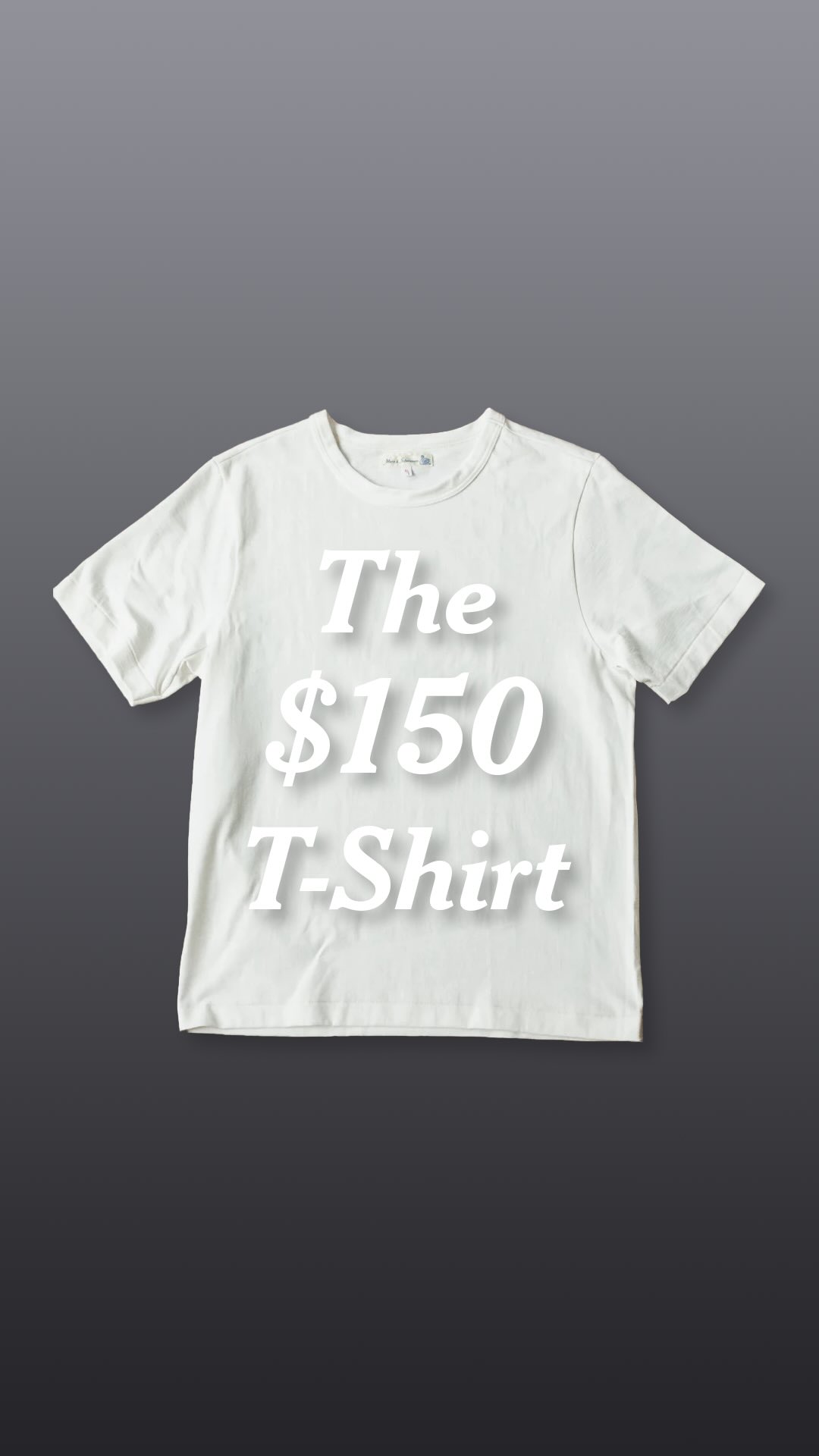 1.6M2×Explaining luxury t-shirt manufacturing process@alextwma · Opportunity Explainer
 673K1.6×Explaining the true cost of t-shirts@frontoffice.co · Breakdown
 278.1K19.4×Explain hoodie quality and pricing@fineasjackson · Breakdown
 103.9K1.9×Explaining true T-shirt quality history@gents.studios · Breakdown
 4.5M241×Explains why linen prices vary@fineasjackson · Breakdown
 593K41.9×Explaining the satin marketing loophole@fineasjackson · Breakdown
 210.4K27.3×Five hidden clothing quality signs@gents.studios · Breakdown
 634.6K34×Explaining hidden suit quality differences@fineasjackson · Breakdown
 1.3MFast facts about cotton production@johndeere · Rapid Fire Listicle
 367.6K8.5×Explaining an ancient, forgotten fabric@fineasjackson · What Is X?
 1.5M72.1×Explaining why cashmere prices vary@fineasjackson · Breakdown
 320.2KDesigner breaks down overshirt fabrics@frontoffice.co · Breakdown
[04]
[05]
What stops the scroll in the first 3 seconds
Title hook · 55%
$10
Verbal hook · 40%
So this t-shirt costs $10 and this t-shirt costs $200.
Visual hook · 5%
The video opens with a direct-to-camera shot of the speaker, then immediately cuts to a clean product shot of a white t-shirt with a '$10' price overlay, followed by a similar shot with a '$200' overlay, creating a stark visual contrast and immediate question.
[06]
Steal this for your own video
vs — same . Here's what they're not telling you.
[07]
The promise the opener makes, and how the video pays it back
Hook
Present two visually similar items with a vast price difference to create a compelling knowledge gap and an immediate question of 'why'.
Payoff
Reiterate the initial paradox but resolve it with the new knowledge, concluding with a memorable, sensory-based takeaway that solidifies the lesson and empowers the viewer's judgment.
[08]
The structural pattern this video runs on
Framework
The Expert Explainer
To deconstruct a common value paradox by revealing a hidden classification system, empowering the viewer with insider knowledge and actionable advice.
The Deceptive Clue
Highlight a shared, labeled attribute that makes the price difference illogical, deepening the mystery and invalidating common assumptions.
The World Divided
Introduce the fundamental binary classification system that governs the items' true quality and value, reframing the problem from a simple comparison to a systemic analysis.
The Common Standard Profile
Detail the characteristics and prevalence of the lower-tier category, establishing it as the default 'workhorse' to create a baseline for comparison.
The Elite Standard Profile
Introduce the higher-tier category, defining its key differentiating physical attribute that makes it superior.
The 'Why It Matters' Mechanism
Provide a scientific or technical explanation for why the key attribute directly impacts performance, quality, and user experience on a microscopic level.
The Pinnacle Justification
Connect the high-priced item to the absolute apex of the elite category, using extreme data on rarity and performance to justify its premium cost.
The Accessible Upgrade
Introduce attainable, mid-tier alternatives that offer most of the elite benefits at a lower price point, providing actionable consumer advice and value.
$200 for a cotton t-shirt…why? How is that even possible? #fashion #cotton #tshirt
informational · beginning
$10
informational · beginning
$200
informational · beginning
100% cotton.
contextual · beginning
difference?
branding · beginning
"Chasing Beauty" Episode 10
title · middle
Difference in Cotton Texture
informational · middle
Long Staple Cotton
informational · middle
Short Staple Cotton
contextual · middle
VS
informational · middle
0.000125% or 1 in 800,000
informational · middle
Sea Island cotton
informational · end
$10
informational · end
$200
So this t shirt costs $10 and this t shirt costs 200. They both say worse% cotton. So what's the difference? What are you actually paying for? And why can't you tell by just looking at the label? This is episode 10 of Chasing Best and today tier taking a look into the wonderful world of cotton. Here's the thing. The cotton world is basically split up into two empires. Upland cotton is the workhorse. It's the cotton that took over the planet because it's hardy, high yield rank can grow almost anywhere. It accounts for about 90% of the world's production. Then there's extra long staple cotton. This is literally a different species from upland cotton with staple lengths that can be twice as long. Here's why that matters. One of the biggest factors in the softness of cotton is the length of its fibers. Fiber length dictates how many interruptions happen at a microscopic level. The shorter the fiber, the more ends there will be. This creates more friction on the skin and leads to pilling as the short fibers escape. The $200 t shirt is made of Sea Island cotton. This is the finest and longest staple cotton in the worse, with production making up only a 150 out of a 120,000,000 cotton bales per year. Sea Island cotton is the world record holder for staple length. Reaching up to 50 millimeters. Standard Upland cotton, it usually clocks in at barely half of that. Typically around 25. But it's not just about the raw fiber. It's also about the spin. Because Sea Island fibers are so long and fine, you can spin them into incredibly high twist yarns that are thin better impossibly strong. Cheap upland cotton has to be spun thick to stay better, which is why your $10 t shirt is rougher and pills much sooner. But good, I get it. Not everyone is dropping two bills on a t shirt. The good news is that Sea Island has descendants that give you 80% of the feel for a fraction of the price. Supima cotton is the cousin to Sea Island. It's a branded version of Pima cotton. If you see a supima tag at a place like Uniqlo, it means the cotton was regulated for quality and grown right here in The States. It's the entry level luxury staple. Giza cotton is the Egyptian powerhouse. Specifically, Giza 45 or 87. It's grown in the Nile Best where the humidity is perfect resulting in a fiber that's incredibly fine and uniform. The reason these matter is that extra long staple. Jumping from that 25 millimeter standard upland to a 40 millimeter Giza or supima changes the physics of the shirt. It's smoother, stronger, and believe me, the difference is immediately noticeable. So though these two shirts are both a 100% cotton, they're just not in the same class. The label won't teach you that, but your hands will.