@fineasjackson
Instagram · Talking Head Edit
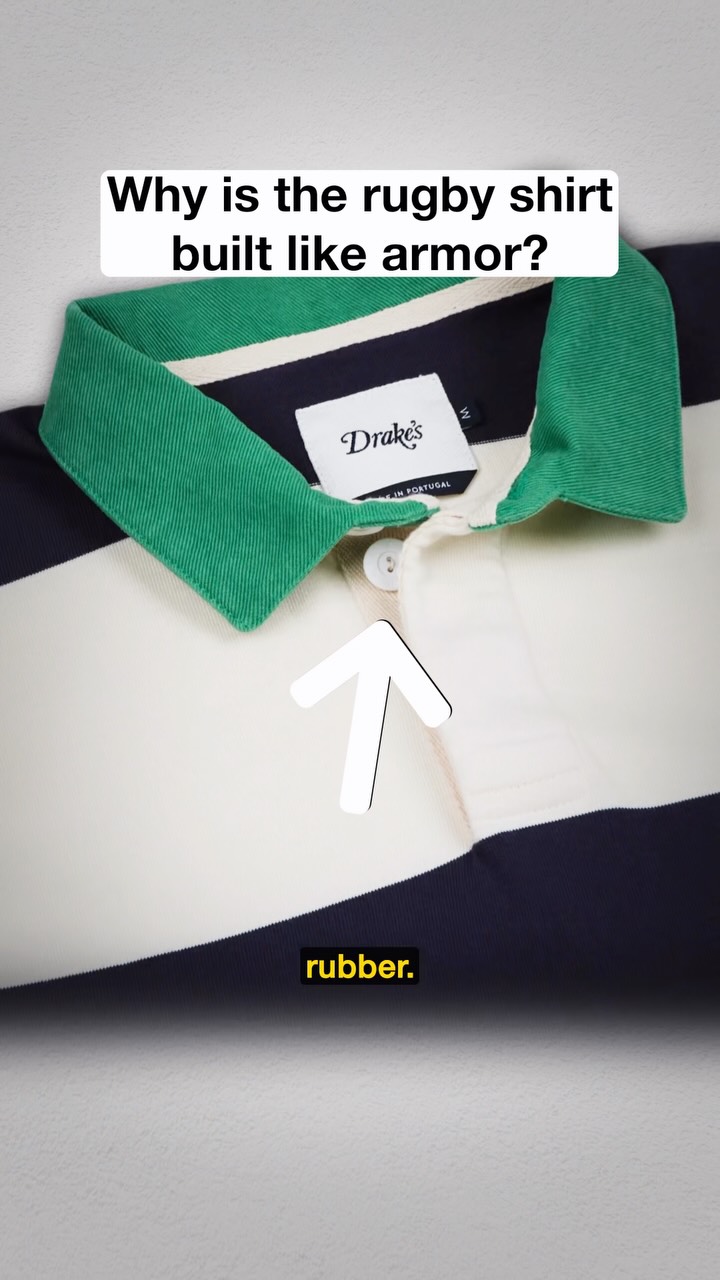
@fineasjackson It looks like fashion, but there’s a reason. Behind every detail on a rugby shirt lies brutal design

@fineasjackson
Instagram · Talking Head Edit
@fineasjackson It looks like fashion, but there’s a reason. Behind every detail on a rugby shirt lies brutal design
Performance
Video #40424 · Talking Head Edit
[01]
The creator poses the question of why rugby shirts are built like armor, then delves into the history of the sport at Rugby School in England. He explains how its violent, hands-on nature necessitated a complete redesign of player apparel. The video systematically breaks down each design element—the short, stiff collar; the rubber, hidden buttons; the heavyweight fabric; and the broad stripes—explaining the functional, safety-driven reason behind each feature, concluding that every detail was engineered for survival in the brutal game.
[02]
[03]
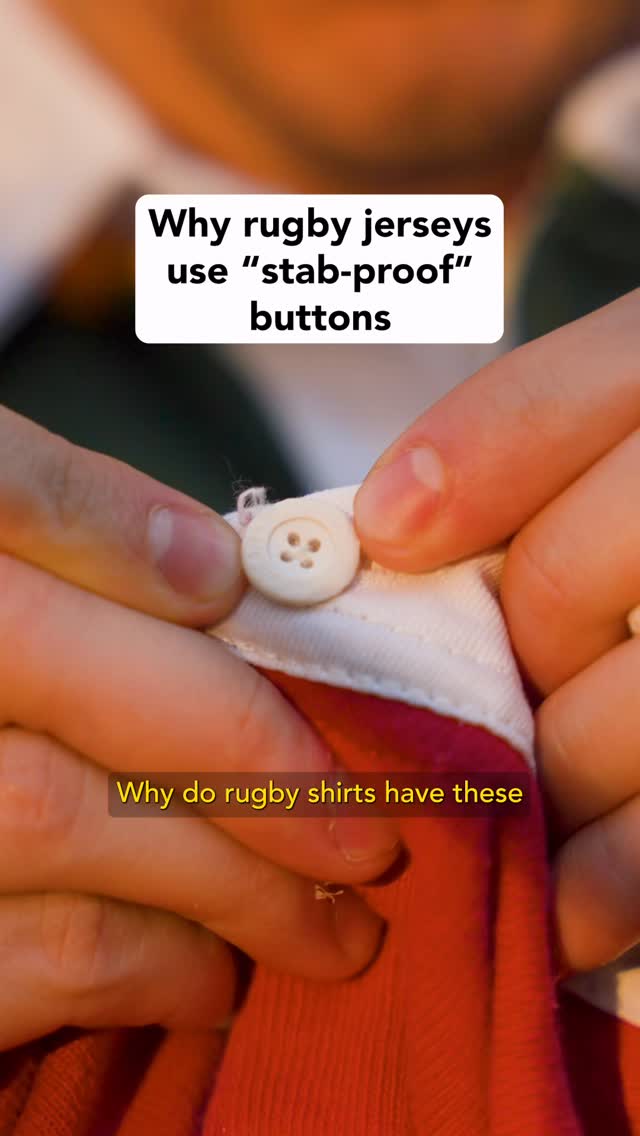 3.2M7.3×Explaining hidden rugby jersey features@theironsnail · What Is X?
 889.9K2×Explaining the history of a word@frontoffice.co · Origin Story
 354.8KDesigner shows jacket creation process@frontoffice.co · Origin Story
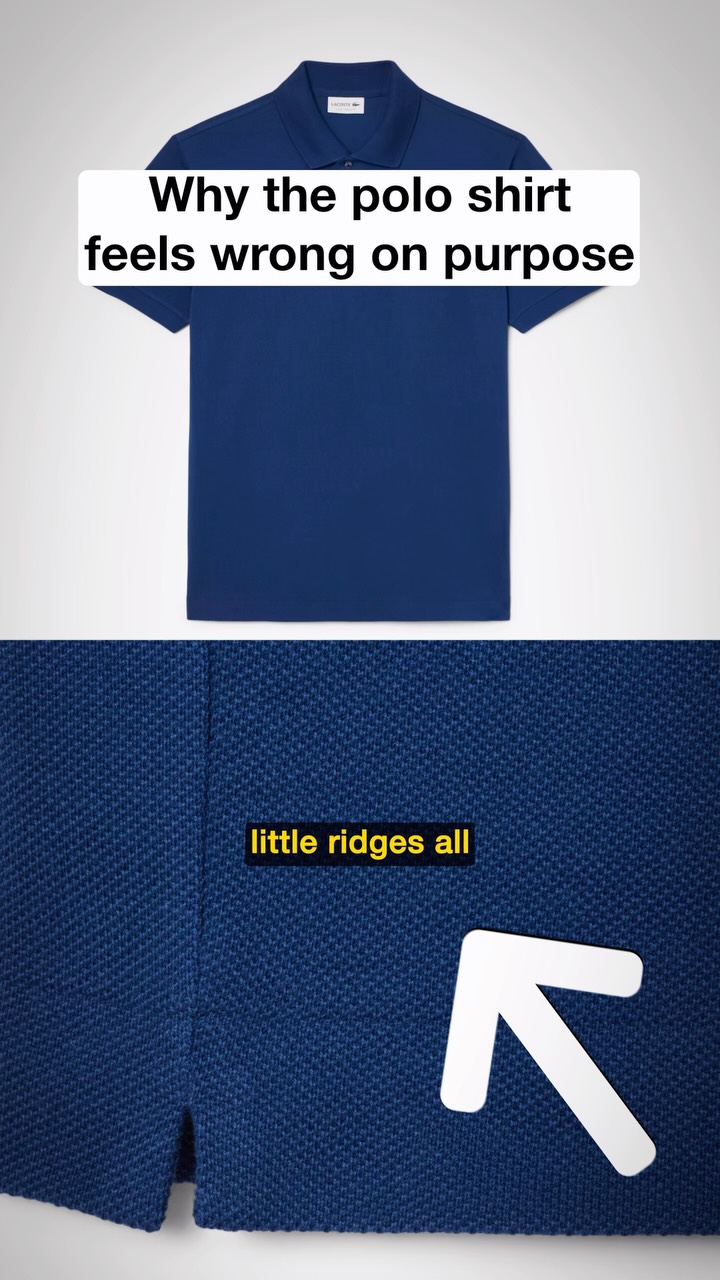 591.7K26.1×Explaining the design of clothing@fineasjackson · Origin Story
 700.9K27.2×Explaining historical armor craftsmanship@fineasjackson · Breakdown
 320.2KDesigner breaks down overshirt fabrics@frontoffice.co · Breakdown
 103.9K1.9×Explaining true T-shirt quality history@gents.studios · Breakdown
 655.4K3.5×Wool science and fabric choices@frontoffice.co · Breakdown
 278.1K19.4×Explain hoodie quality and pricing@fineasjackson · Breakdown
 247.7K5×Clothing quality check: understanding seams@gents.studios · Explainer
 569.7K1.4×Solving production problems with design@frontoffice.co · Case Study Breakdown
 590K2×Jacket design process breakdown@sakata.ken · Breakdown
[04]
[05]
What stops the scroll in the first 3 seconds
Title hook · 45%
Why is the rugby shirt built like armor?
Verbal hook · 50%
This button is rubber. This collar was cut in half. These stripes aren't style.
Visual hook · 5%
A direct-to-camera shot of the speaker is quickly intercut with close-up product shots of a rugby shirt, featuring large white arrows pointing to specific design details like the button and collar.
[06]
Steal this for your own video
This isn't — it's .
[07]
The promise the opener makes, and how the video pays it back
Hook
A rapid-fire series of counter-intuitive claims about a familiar object, creating an immediate knowledge gap and promising a revelation.
Payoff
The final restatement of the core thesis, connecting all the deconstructed features back to the central, powerful idea and leaving the viewer with a new perspective on the familiar object.
[08]
The structural pattern this video runs on
Framework
The Hidden Function Framework
To deconstruct a familiar object or concept by revealing that its apparent aesthetic features are actually highly engineered solutions to a hidden, often extreme, problem.
The Violent Thesis
A single, powerful statement that summarizes the central argument and sets a dramatic tone for the analysis.
The Origin Context
An explanation of the historical or environmental conditions that created the core problem, establishing the 'why' before the 'how' and grounding the subsequent claims in a compelling backstory.
The Feature Gauntlet
A series of mini-analyses where individual features of the object are isolated and examined using a repeating micro-pattern. This forms the main body of evidence for the video's thesis.
The Conclusive Summary
A final beat that recaps the key evidence presented and restates the core thesis in a powerful, memorable way, providing satisfying narrative closure.
It looks like fashion, but there’s a reason. Behind every detail on a rugby shirt lies brutal design
title · beginning
Why is the rugby shirt built like armor?
branding · beginning
"Chasing Beauty" Episode 76
title · beginning
The Game Behind the Shirt
contextual · middle
William Webb Ellis
title · middle
The Game Behind the Shirt Collar and Buttons
title · end
The Game Behind the Shirt Collar and Buttons Fabric and Stripes
contextual · end
Rugby Shirt
contextual · end
T-Shirt
This button is rubber. This collar was cut in half. These stripes aren't style. Nothing on this shirt is fashion. It was built for a game of violence. This is episode 76 of Chasing Best, and today we're looking at the design of the rugby shirt. The sport that would need this shirt started at a school, rugby school in Warwickshire, England. One of the oldest and most exclusive boarding schools in the country. The boys there had been playing a loosely organized kicking game for centuries. Then, according to legend, in 1823, a student named William Webb Ellis picked up the ball and ran. Whether that actually happened is debated. What's not debated is that by the eighteen forties, the boys at rugby school were playing a version of football where you could grab the ball and grab each other. And that changed everything about what they wore. Early rugby shirts borrowed their collars from dress shirts. Tall, soft, and easy to fold down. The problem was the tackle. A tall collar is the easiest thing on a shirt to grab. One hand on it and you can wrench a man down by the neck. So rugby collars got cut short. Low enough that there's less real estate to seize. Stiff enough that it doesn't fold over and offer a grip. Now good at the buttons. On most shirts, buttons are plastic, horn or metal. On a rugby shirt, they're rubber. The reason is brutal. In this sport, a player's face regularly slams into another player's chest. A hard button in that zone is a weapon. It splits skin open and chips teeth. Rubber compresses on impact. But even rubber wasn't enough. Look at how the buttons sit. They're not exposed. They're hidden behind a fabric flap called a placket. In a scrum, eight men pack chest to to chest any raised surface, even soft, becomes a pressure point. So the shirt buries the rubber buttons. And the whole front of the chest becomes a smooth, unbroken surface. Then there's the weight of the fabric itself. Pick up a rugby shirt and compare it to a simple tee. It's noticeably heavier. That's because rugby is one of the only sports where grabbing your opponent's clothing is legal. Defenders seized the ball carrier shirt to haul them down. A lightweight jersey would rip in one pull. So the cotton was knit dense and heavy to survive being pulled hundreds of tier per match. And then the stripes. Before numbered jerseys, before television, matches were played on muddy fields in front of crowds who couldn't tell one mud soaked player from another. Broad, horizontal stripes solved this. They stayed visible at a distance even when half the shirt was caked in dirt. Each club picked its own combination. So the next time you see one hanging in a shop window, look at it closely. The rubber buttons, the short collar, and the heavy knit. Every detail on that shirt was engineered to survive a game that tore bodies apart.