@frontoffice.co
TikTok · Talking Head Edit


@frontoffice.co
TikTok · Talking Head Edit
Performance
Video #6718 · Talking Head Edit
[01]
The speaker poses the question of why football shirts are called jerseys. He then explains the etymology, tracing the name back to a knit fabric, which was named after the island of Jersey, which in turn was named after a Norse figure. He details the fabric's history, its popularization by Coco Chanel, its adoption for sports uniforms, and its eventual replacement by polyester in the 1970s, though the name stuck. Finally, he explores the hypothetical and complex process of creating a modern, multi-paneled jersey using the original jersey fabric, concluding it would be too difficult and impractical.
[02]
[03]
 569.7K1.4×Solving production problems with design@frontoffice.co · Case Study Breakdown
 511.7K19.1×Explaining shirt design through history@fineasjackson · What Is X?
 3.2M7.3×Explaining hidden rugby jersey features@theironsnail · What Is X?
 354.8KDesigner shows jacket creation process@frontoffice.co · Origin Story
 591.7K26.1×Explaining the design of clothing@fineasjackson · Origin Story
 3.7M5×Explains historical sweater knitting technique@theironsnail · Breakdown
 103.9K1.9×Explaining true T-shirt quality history@gents.studios · Breakdown
 823.1K1×Explaining a famous clothing innovation@alextwma · Origin Story
 2M5×Explaining hoodie design problem-solving@frontoffice.co · Breakdown
 278.1K19.4×Explain hoodie quality and pricing@fineasjackson · Breakdown
 282.7KFabric history and modern reinvention@frontoffice.co · Explainer
 1.1M14.4×Designer shows mistake and fix@yitaigeng · Origin Story
[04]
[05]
What stops the scroll in the first 3 seconds
Verbal hook · 70%
Why a football jersey is called Jersey?
Visual hook · 30%
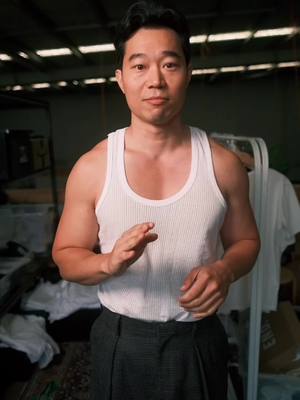
A speaker in a warehouse setting with an illustrative archival image of a football player appearing next to him.
[06]
Steal this for your own video
Why is a called a ?
[07]
The promise the opener makes, and how the video pays it back
Hook
A direct, curiosity-driven question about the origin of a common term or object.
Payoff
The Pragmatic Reversal. Conclude by abruptly dismissing the entire creative hypothesis as impractical or something 'you just wouldn't do,' subverting the viewer's expectation and adding a memorable, personality-driven sign-off.
[08]
The structural pattern this video runs on
Framework
The Etymological Deep Dive & Creative Reimagining
Answering a simple 'Why is X called X?' question by tracing its history, explaining its modern obsolescence, and then exploring the complex hypothetical of recreating the original concept with modern standards.
The Etymological Cascade
Provide a rapid, multi-layered answer that traces the name from its immediate source to its deeper origins (e.g., object -> material -> place -> person).
The Origin Story
Briefly explain the historical context where the original object/concept was created, highlighting its key original properties.
The Unexpected Pivot
Introduce a surprising historical application or popularization of the object/concept from an unrelated field, broadening its context and appeal.
The Functional Bridge
Connect the original properties back to the context mentioned in the hook, closing the initial explanatory loop.
The Modern Disruption
Explain how and why the original object/concept was replaced by a modern equivalent, detailing the superior performance and design flexibility of the new version.
The Lingering Legacy
State that despite the material/technical change, the original name persisted, solidifying the answer to the initial question.
The Creative Hypothesis
Pose a compelling 'what if' question: What if we tried to make a modern version of the object using the *original* principles or materials?
The Technical Gauntlet
Deconstruct the immense difficulty of this hypothetical, detailing the specific, complex manufacturing and design challenges involved. This serves as a display of deep expertise.
The Artistic Vision
Describe the unique, superior, and more meaningful aesthetic result that would come from overcoming these challenges, contrasting it with mass-produced modern equivalents.
Why a football jersey is called Jersey? It's because this knit fabric is called Jersey. And really, it's because this place is called Jersey. And the island is called Jersey because it was the island of a guy called Tier or was the island of a Jarl. Norse stuff. So Jersey Island is one of the Channel Islands between England and France. In medieval tier, it was a place where a particular fabric was developed. It was made out of wool and became known as jersey fabric. Though it's soft and allowed for movement and in nineteen ten's Coco Chanel creates a bit of a tier when she uses jersey fabric to use for dresses because it's practical, inexpensive and allowed for movement. It becomes one of her early successes. And because of those qualities, it was used for underwear and it was used for sports uniforms or jerseys. But in nineteen seventies, they were replaced by polyester uniform. Polyester best way better from a performance point of view. It's less absorbent, it's cheaper to manufacture, and with innovations in dye sublimation, you could put whatever on a polyester jersey. Shapes, different colors, practically limitless design for the same cost. So the name stuck and fifty years better, we're still calling them jerseys. What if we made a modern jersey out of jersey fabric? Would that be crazy? By just breaking down a modern jersey into panels, you need to dye each individual panel differently. And you have to be careful because each individual color dyes at a different temperature which would shrink your fabric at a different rate. And then, you gotta think about the decorative things like, breathe through panels and stripes. You good have to find a natural equivalent for those things. But you would have an interesting geosier. And because every panel is deliberately planned for, it would seem like a three-dimensional piece of design better than just a JPEG someone's printed out. You wouldn't do that though. You wouldn't do that.